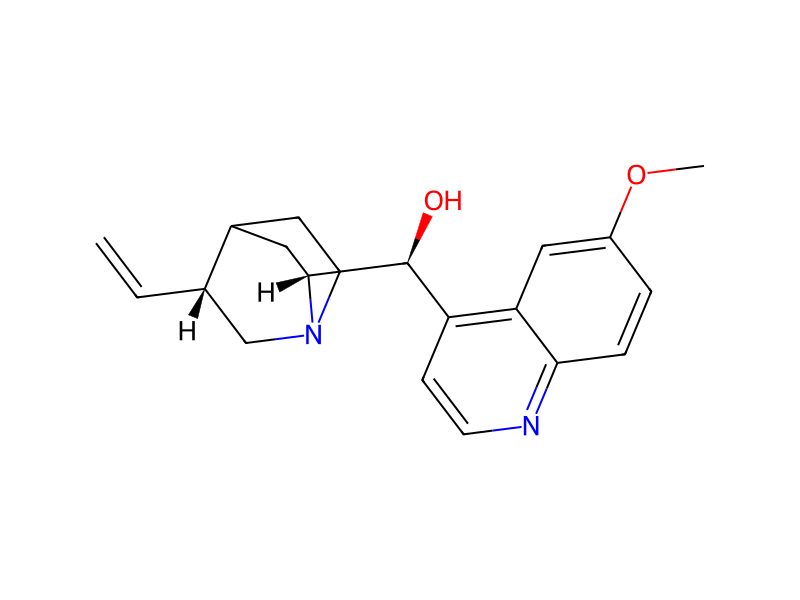
(S)-[(2R,5R)-5-ethenyl-1-azabicyclo[2.2.2]octan-2-yl]-(6-methoxyquinolin-4-yl)methanol → 3-(4-Cyanophenyl)isoxazolin-5-ylacetic acid
反応式

C[C@H:2]([NH:11]C)[C@H](O)C1C=CC=CC=1.[C:13]1([CH:19]([CH2:21]O)[NH2:20])[CH:18]=[CH:17][CH:16]=[CH:15][CH:14]=1.N[CH:24]([CH2:27][O:28]C)[CH2:25][OH:26].C[O:31]C1C=CC2N=CC=C([C@H](O)[C@@H]3N4C[C@H](C=C)C(CC4)C3)C=2C=1.C[C@H](NC)[C@@H](O)C1C=CC=CC=1>>[C:2]([C:16]1[CH:15]=[CH:14][C:13]([C:19]2[CH2:21][CH:27]([CH2:24][C:25]([OH:26])=[O:31])[O:28][N:20]=2)=[CH:18][CH:17]=1)#[N:11]参加物


実験手順
3-(4-Cyanophenyl)isoxazolin-5(S)-ylacetic acid (127 g, 0.55 moles) and (+)-cinchonidine (180.37 g, 0.55 mol) were added to acetone (2.0 L) and stirred at ambien temperature for at least 1.5 hrs. The resulting precipitate (169.21 g) was collected by filtration. The precipitate was dissolved in hot acetone (4.0 L) while stirring. After complete dissolution, the solution was allowed to stand overnight. The crystals formed were collected by filtration and recrystallized with acetone gain to yield the 3-(4-cyanophenyl)isoxazolin-5(S)-lacetic acid/(+)-cinchonidine salt in 33% overall yield and >99 % diastereomeric excess. The 3-(4-cyanophenyl)isoxazolin-5(S)-ylacetic acid was liberated from its cinchonidine salt complex by suspending the salt in ethereal HCL (1 N), filtering the solid after equilibration and evaporating the ether solution to provide the solid 3-(4-cyanophenyl)isoxazolin-5(S)-ylacetic acid. The R-isomer could be obtained from the mother liquor. Other chiral bases used include ephedrine, 2-phenylglycinol, 2-amino-3-methoxy-1-propanol, quinidine and pseudoephedrine.
後処理
- customThe R-isomer could be obtained from the mother liquor
出典と根拠
- ORDレコード
- ord-ae1b5d7fb76040c684b9a09072849e44
- 出典データセット
- uspto-grants-2000_09
- 特許番号
- US06114328
反応ノート
読み込み中…