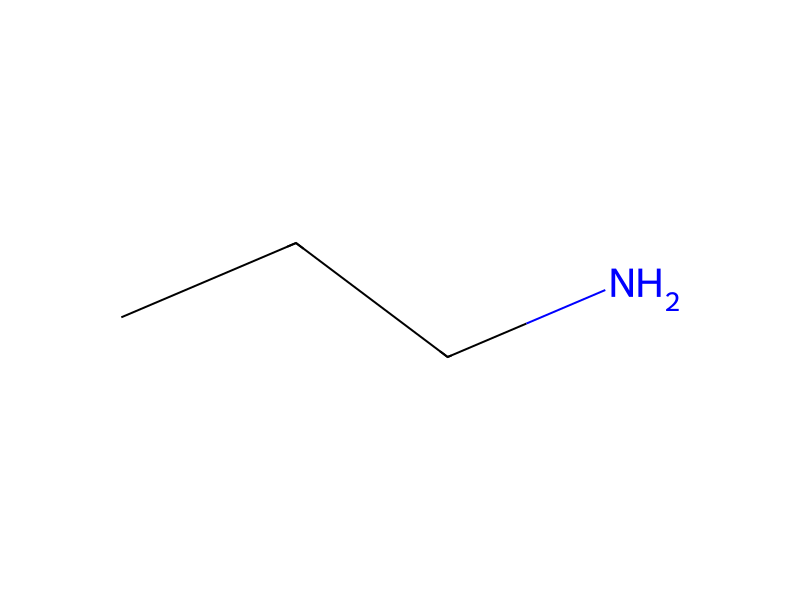
[CH:1]([C:3]1[CH:4]=[C:5]([CH:15]=[CH:16][C:17]=1[N+:18]([O-:20])=[O:19])[O:6][C:7]1[CH:8]=[C:9]([CH:12]=[CH:13][CH:14]=1)[C:10]#[N:11])=O.[CH2:21]([NH2:24])[CH2:22][CH3:23].[BH-](OC(C)=O)(OC(C)=O)OC(C)=O.[Na+].C([O-])(O)=O.[Na+]>ClCCCl>[N+:18]([C:17]1[CH:16]=[CH:15][C:5]([O:6][C:7]2[CH:8]=[C:9]([CH:12]=[CH:13][CH:14]=2)[C:10]#[N:11])=[CH:4][C:3]=1[CH2:1][NH:24][CH2:21][CH2:22][CH3:23])([O-:20])=[O:19]Under N2, a mixture of 3-(3-formyl-4-nitrophenoxy)-benzonitrile (0.056 mol) and propylamine (0.059 mol) in DCE (450 mL) was stirred at room temperature, and then NaBH(OAc)3 (0.063 mol) was added, and the reaction mixture was stirred overnight at room temperature. A saturated NaHCO3 solution was added, and the layers were separated. The organic layer was dried, filtered off and the solvent was evaporated. The residue was purified over silica gel filter (eluent: 99:1 CH2Cl2:CH3OH). The purest product fractions were collected and the solvent was evaporated to yield the title compound as a residue.