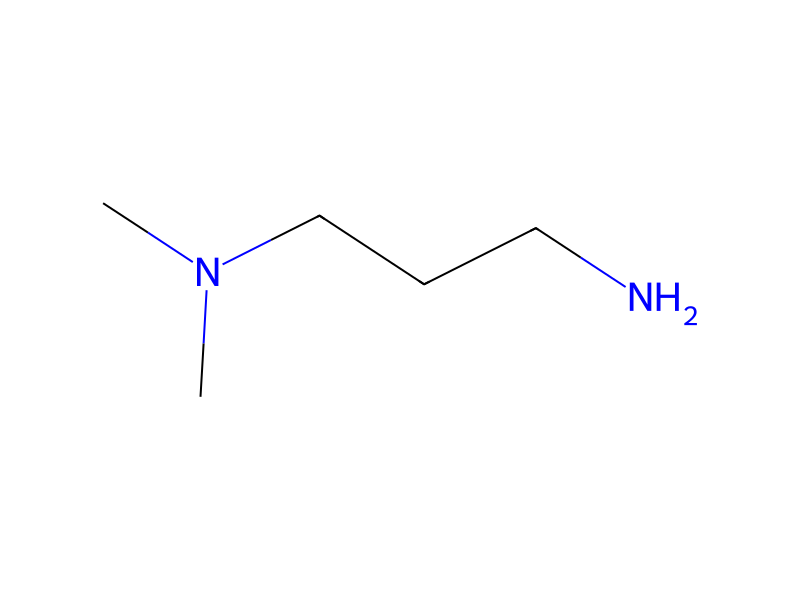
[CH2:1]([O:3][C:4]([C:6]1[C:7]([CH3:17])=[N:8][C:9]([Cl:16])=[C:10]([N+:13]([O-:15])=[O:14])[C:11]=1Cl)=[O:5])[CH3:2].C(O)C.[CH3:21][N:22]([CH3:27])[CH2:23][CH2:24][CH2:25][NH2:26]>C(N(CC)CC)C>[Cl:16][C:9]1[N:8]=[C:7]([CH3:17])[C:6]([C:4]([O:3][CH2:1][CH3:2])=[O:5])=[C:11]([NH:26][CH2:25][CH2:24][CH2:23][N:22]([CH3:27])[CH3:21])[C:10]=1[N+:13]([O-:15])=[O:14]139.5 g. of 4,6-dichloro-2-methyl-5-nitropyridine-3-carboxylic acid ethyl ester (0.5 Mol.) in 500 ml. of ethyl alcohol are heated at reflux temperature. 60 g. of triethylamine are added and then 51 g. of 3-(dimethylamino)propylamine are slowly dropped in with stirring. After the addition is completed, heating is continued for 10 minutes. The solvent is distilled off and the residue is treated with 200 ml. of water and made alkaline (pH 9-10) with sodium hydroxide. The mixture is extracted three times with 150 ml. portions of ether. The organic layers are combined, dried over calcium chloride and evaporated to dryness. The residue is recrystallized from methanol, yield 110 g. (64%), m.p. < 20°.