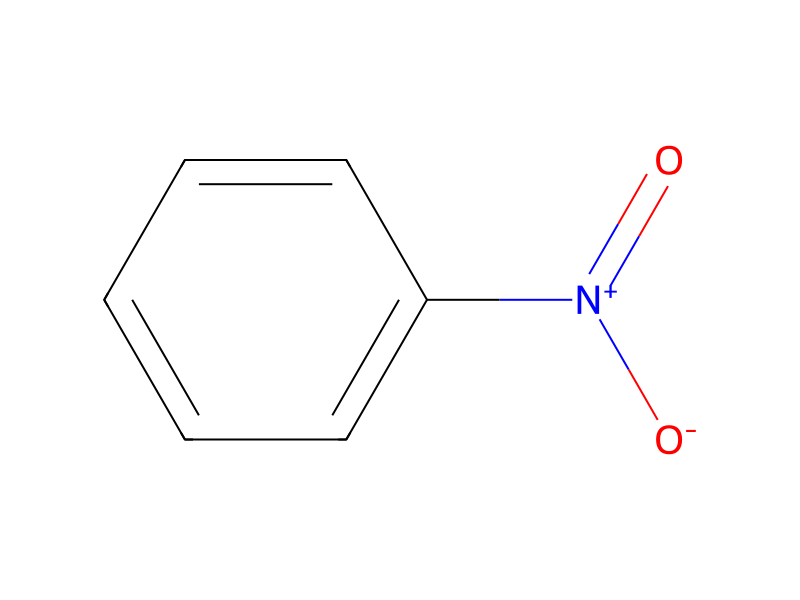
[NH2:1][C:2]1[C:15]2[C:14](=[O:16])[C:13]3[C:8](=[CH:9][CH:10]=[CH:11][CH:12]=3)[C:7](=[O:17])[C:6]=2[CH:5]=[CH:4][CH:3]=1.[N+]([C:21]1C=CC=CC=1)([O-])=O.[OH-].[K+].COS(=O)(=O)OC>[Br-].C([N+](CCCC)(CCCC)CCCC)CCC.C(O)(=O)C.O>[CH3:21][NH:1][C:2]1[C:15]2[C:14](=[O:16])[C:13]3[C:8](=[CH:9][CH:10]=[CH:11][CH:12]=3)[C:7](=[O:17])[C:6]=2[CH:5]=[CH:4][CH:3]=1A mixture of 1-aminoanthraquinone (purity 99.6%, 22.4 g), nitrobenzene (224 g), 96% potassium hydroxide (11.7 g), tetra-n-butyl ammonium bromide (1.7 g) and dimethylsulfuric acid (25 g) was stirred, while being maintained at 30° C. for 24 hours. Then, after water (150 g) was added, the solution was stirred for one hour while being maintained at 50° C. The aqueous phase had pH of 10 or higher. After acetic acid (0.5 g) was added for neutralization until pH of the aqueous phase was 7, nitrobenzene was recovered. The solution was cooled down to 50° C., and filtered. The solid material was washed and dried, to obtain 1-methylaminoanthraquinone (23.7 g, purity: 99.5%, yield 99.5%).