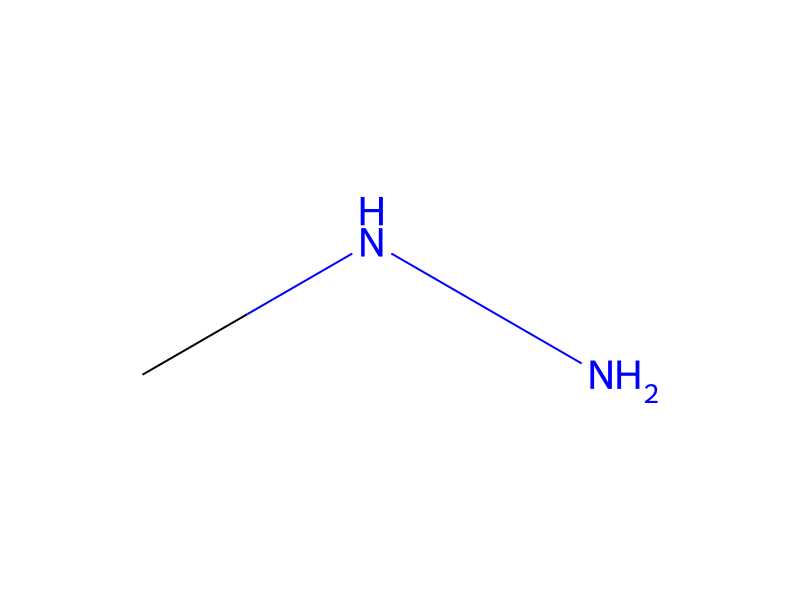
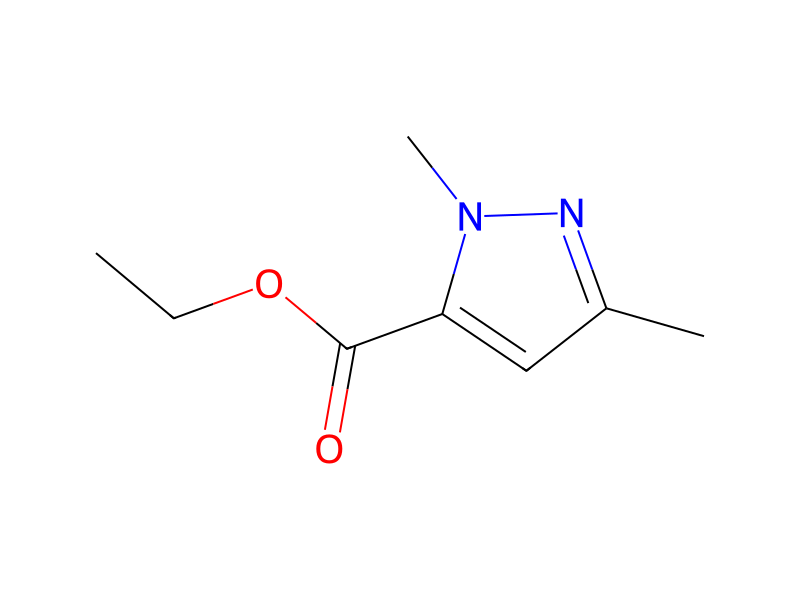
Methylhydrazine → 1,3-Dimethyl-5-ethoxycarbonylpyrazole
HRID 2058043
反応式

[CH3:1][CH2:2][O:3][C:4]([C:6]([CH2:8][C:9]([CH3:11])=O)=O)=[O:5].[CH3:12][NH:13][NH2:14]>C(O)C>[CH3:12][N:13]1[C:6]([C:4]([O:3][CH2:2][CH3:1])=[O:5])=[CH:8][C:9]([CH3:11])=[N:14]1参加物
4


実験手順
Ethyl acetopyruvate (Organic Syntheses, Coll. Vol. I, 1944, p. 238) (31.6 g) was dissolved in ethanol (100 ml) and treated with methyl hydrazine (12 g) in portions. The mixture was then refluxed gently for 1 hr, whereupon most of the ethanol was removed in vacuo. The residue was poured into 5% NaCl solution and the product extracted with chloroform (3×100 ml). The combined extracts were washed with water, dried and the solvent evaporated. The residue was then distilled in vacuo. 1,3-dimethyl-5-ethoxycarbonylpyrazole (14.5 g 43%) was obtained as a colourless oil, b.p.25 118°-121° C. (A mixture of the two isomers (1.5 g), followed by pure 1,5-dimethyl-3-ethoxycarbonylpyrazole (10.5 g, 31%), b.p.25 178°-180° C., was obtained on continued distillation).