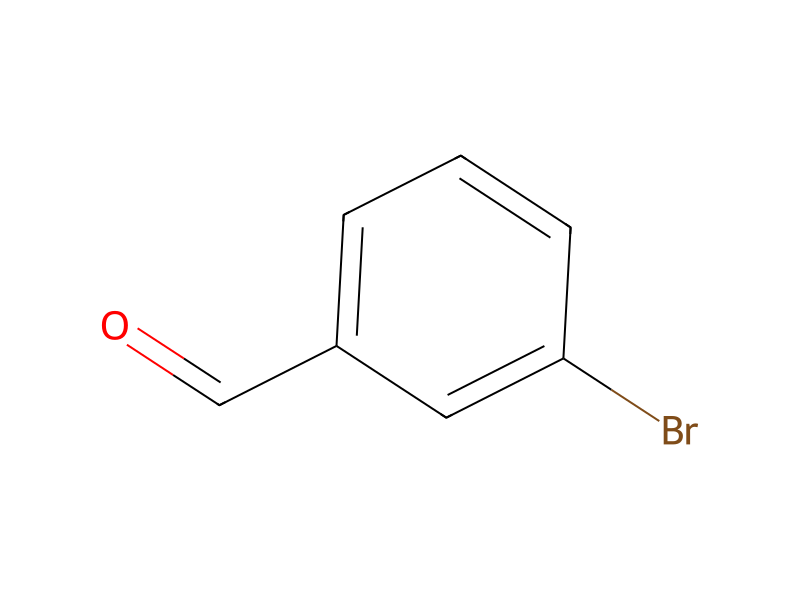
[CH3:1][C@H:2]1[CH2:7][NH:6][CH2:5][CH2:4][N:3]1[C:8]([O:10][C:11]([CH3:14])([CH3:13])[CH3:12])=[O:9].[Br:15][C:16]1[CH:17]=[C:18]([CH:21]=[CH:22][CH:23]=1)[CH:19]=O.[BH-](OC(C)=O)(OC(C)=O)OC(C)=O.[Na+]>C(Cl)Cl>[Br:15][C:16]1[CH:17]=[C:18]([CH2:19][N:6]2[CH2:5][CH2:4][N:3]([C:8]([O:10][C:11]([CH3:13])([CH3:12])[CH3:14])=[O:9])[C@@H:2]([CH3:1])[CH2:7]2)[CH:21]=[CH:22][CH:23]=1A solution of 1,1-dimethylethyl (2S)-2-methyl-1-piperazinecarboxylate (100 mg, 0.5 mmol) in CH2Cl2 (5 mL) was mixed with 3-bromo benzaldehyde (0.06 mL, 0.5 mmol) and NaB(OAc)3H (0.16 g, 0.75 mmol). The resulting mixture was stirred for 12 hours, diluted with dichloromethane (30 mL) and washed with brine (50 mL). The organic layer was collected, dried over Na2SO4 and concentrated. Separation via a combiflash system then afforded the title compound (150 mg, 81%): LC/MS: m/z, 369 (M+H); 1HNMR (MeOD) δ 1.26 (3H, d), 1.47 (9H, s), 2.0 (1H, m), 2.1 (1H, m), 2.6 (1H, m), 2.8 (1H, m), 3.1 (1H, m), 3.3 (2H, s), 3.4 (1H, m), 3.5 (1H, m), 3.8 (1H, m), 4.2 (1H, m), 4.88 (1H, s), 7.25 (1H, m), 7.3 (1H, m), 7.4 (1H, m), 7.55 (1H, s).