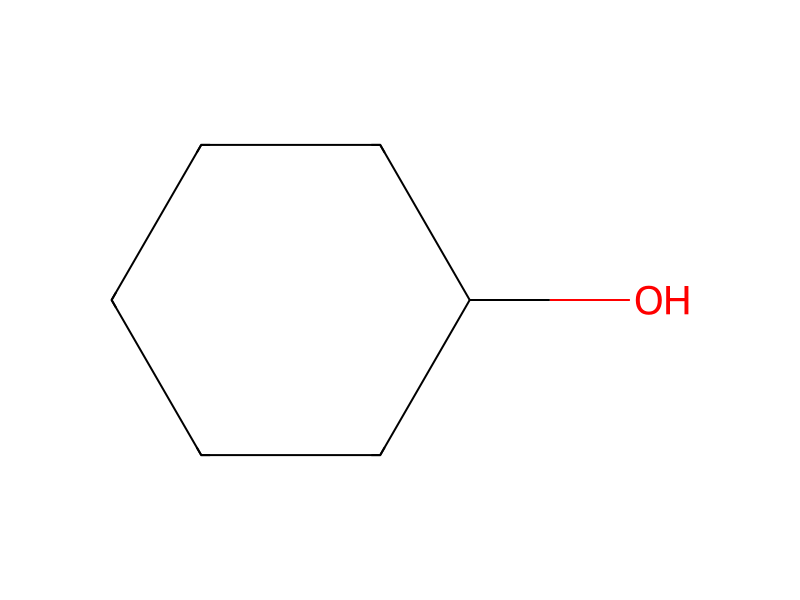
[Cl:1][C:2]1[CH:7]=[CH:6][C:5]([S:8]([CH2:11][C:12]2[CH:17]=[C:16]([F:18])[CH:15]=[CH:14][C:13]=2[F:19])(=[O:10])=[O:9])=[CH:4][CH:3]=1.[CH:20]1(O)[CH2:25][CH2:24][CH2:23][CH2:22][CH2:21]1.C(C=P(CCCC)(CCCC)CCCC)#N>C1(C)C=CC=CC=1>[Cl:1][C:2]1[CH:7]=[CH:6][C:5]([S:8]([CH:11]([CH:20]2[CH2:25][CH2:24][CH2:23][CH2:22][CH2:21]2)[C:12]2[CH:17]=[C:16]([F:18])[CH:15]=[CH:14][C:13]=2[F:19])(=[O:10])=[O:9])=[CH:4][CH:3]=1The 2-[(4-chlorophenyl)sulfonylmethyl]-1,4-difluorobenzene (240 mg, 0.793 mmol) obtained in Referential Example 1 was dissolved in toluene (20 ml). After addition of cyclohexanol (0.11 ml, 1.0 mmol) and cyanomethylenetri-n-butylphosphorane (250 mg, 1.0 mmol), the resulting mixture was heated under reflux for 14 hours under an argon atmosphere. The reaction mixture was allowed to cool and then, cyclohexanol (0.22 ml, 2.1 mmol) and cyanomethylenetri-n-butylphosphorane (500 mg, 2.08 mmol) were added thereto. Under an argon atmosphere, the resulting mixture was heated under reflux for 14 hours. The reaction mixture was allowed to cool and concentrated under reduced pressure. The residue thus obtained was purified by silica gel chromatography (hexane:ethyl acetate=30:1) to give a white solid. The white solid was washed with hexane to give the title compound (188 mg, 62%) as a white powder.