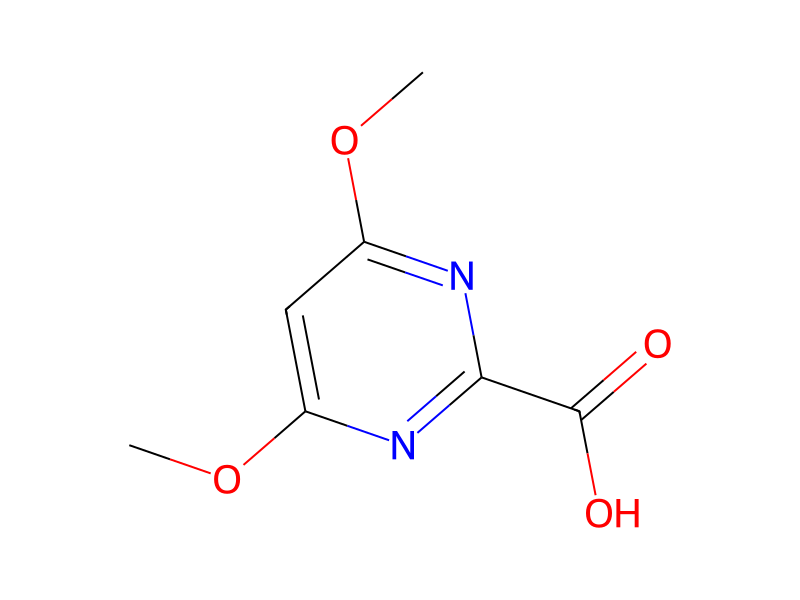
2.4 g of 2,6-dichlorophenyl sulfamate are added in portions at 0° C. to 2° C. to a mixture of 2.3 g of dicyclohexylcarbodiimide, 120 mg of 4-dimethylaminopyridine and 2.2 g of 4,6-dimethoxypyrimidine-2-carboxylic acid in 80 ml of absolute dichloromethane, and stirring is continued for 0.5 hour at 0° C. and 3 hours at room temperature. The mixture is filtered off with suction, the organic phase is washed with 100 ml of 1N hydrochloric acid and then with water and dried over sodium sulfate. The solvent is distilled off, and the residue is recrystallized from diisopropyl ether. This gives 3.2 g of 2,6-dichlorophenyl N-[(4,6-dimethoxypyrimidin-2-yl)carbonyl]sulfamate of melting point 136°-139° C.