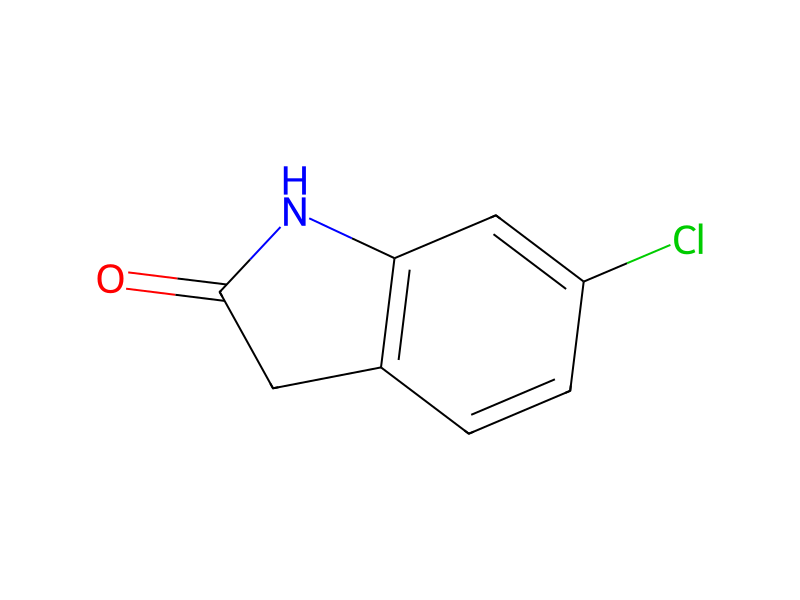
A mixture of 6-chlorooxindole (0.42 g, 2.5 mmol) (Crescent), 3-chlorobenzyl bromide (1.13 g, 5.5 mmol) (Aldrich), potassium iodide (1.04 g, 6.25 mmol) and potassium carbonate (1.04 g, 7.5 mmol) in acetone (10 mL) was heated at 60° C. for 20 hours in a sealed tube. After cooling, mixture was diluted with ethyl acetate (50 mL) and extracted with water (50 mL) and brine (50 mL). Aqueous layers were back washed with ethyl acetate (50 mL). Organic layers were combined, dried (MgSO4), filtered and concentrated. Residue was recrystallized from ethyl acetate-hexanes to give 6-chloro-3,3-bis-(3-chlorobenzyl)-1,3-dihydro-indol-2-one as white needles. (Yield 0.31 g, 29.8%).