3'-Hydroxyphenylacetic acid → (3-{[2-(Methoxycarbonyl)benzyl]oxy}phenyl)acetic acid
HRID 2111972
反応式

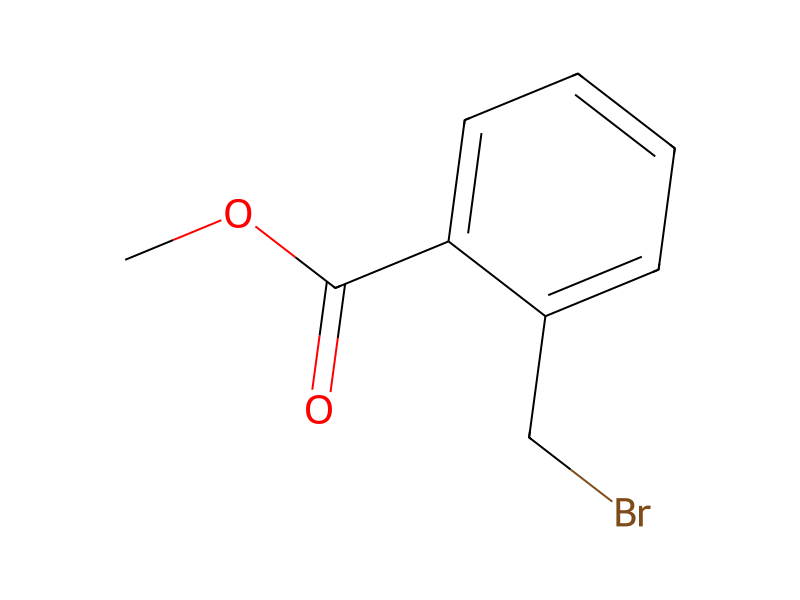
[OH:1][C:2]1[CH:3]=[C:4]([CH2:8][C:9]([OH:11])=[O:10])[CH:5]=[CH:6][CH:7]=1.[OH-].[K+].[CH3:14][O:15][C:16](=[O:25])[C:17]1[CH:22]=[CH:21][CH:20]=[CH:19][C:18]=1[CH2:23]Br>C(O)C>[CH3:14][O:15][C:16]([C:17]1[CH:22]=[CH:21][CH:20]=[CH:19][C:18]=1[CH2:23][O:1][C:2]1[CH:3]=[C:4]([CH2:8][C:9]([OH:11])=[O:10])[CH:5]=[CH:6][CH:7]=1)=[O:25]参加物
5




実験手順
3-Hydroxyphenylacetic acid (760 mg, (5 mmol) was dissolved in ethanol (99.5%, 20 ml). Potassium hydroxide (560 mg, 10 mmol) was added. The mixture was stirred for 30 minutes. 2-Bromomethylbenzoic acid methyl ester (1.144 g, 5 mmol) was then dropped in. The resulting mixture was heated to reflux for 2 hours and then evaporated in vacuum to dry. Water and ethyl acetate were added into the residue and the phases were separated. The water phase was acidified with 10% hydrochloric acid, pH˜5, and then extracted with ethyl acetate. The organic phase was dried (magnesium sulphate) and evaporated in vacuum to dry. Chromatography of the residue on a column (ISOLUTE® SI, 5 g/25 ml) using DCM, MeOH/DCM (1:99) as eluant gave 213 mg, the desired product, yield 14%.