Benzotriazol-1-yloxy-tris(dimethylamino)phosphonium hexafluorophosphate → HCID 89500248、化合物
反応式

[C:1]([O:5][C:6]([N:8]1[CH2:12][CH2:11][CH:10]([C:13]2[CH:21]=[CH:20][CH:19]=[CH:18][C:14]=2[C:15](O)=[O:16])[CH2:9]1)=[O:7])([CH3:4])([CH3:3])[CH3:2].N.N.C[N:25]([P+](ON1N=NC2C=CC=CC1=2)(N(C)C)N(C)C)C.F[P-](F)(F)(F)(F)F>ClCCl>[C:15]([C:14]1[CH:18]=[CH:19][CH:20]=[CH:21][C:13]=1[CH:10]1[CH2:11][CH2:12][N:8]([C:6]([O:5][C:1]([CH3:4])([CH3:3])[CH3:2])=[O:7])[CH2:9]1)(=[O:16])[NH2:25]参加物
5
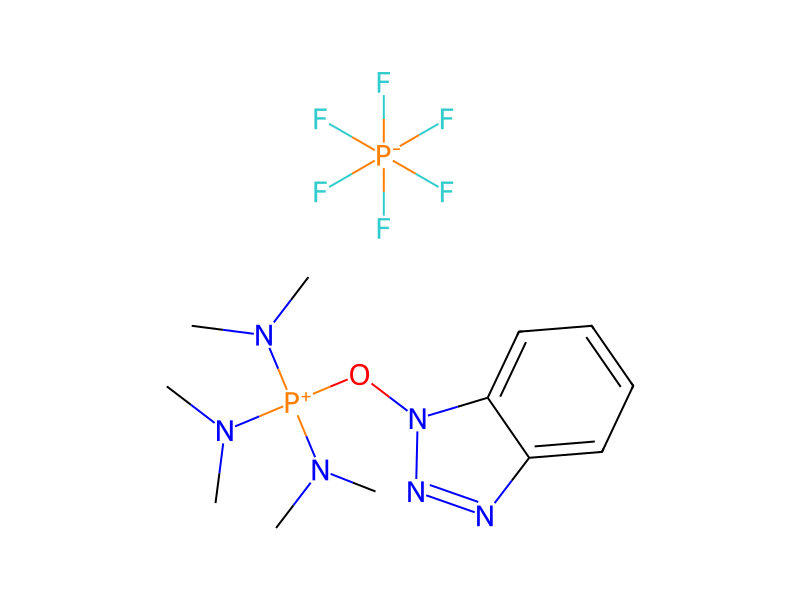



実験手順
A stirred solution of 2-[1-(tert-butoxycarbonyl)pyrrolidin-3-yl]benzoic acid a1-3 (5.5 g, 19 mmol, 1 eq) in dichloromethane (150 ml) is saturated, at 0° C., with gaseous ammonia NH3 for 1 hour. BOP reagent (8.82 g, 19.9 mmol, 1.05 eq) is added portionwise to this solution. The reaction mixture is warmed to room temperature and stirred overnight. The reaction mixture is filtered off and the solid washed with dichloromethane (100 ml). The organic layer is evaporated under vacuum and the residue obtained is purified by chromatography over silicagel (eluent: CH2Cl2/MeOH 98.5/1.5) to give 5.4 g of tert-butyl 3-(2-carbamoylphenyl)pyrrolidine-1-carboxylate a1-4.