反応式
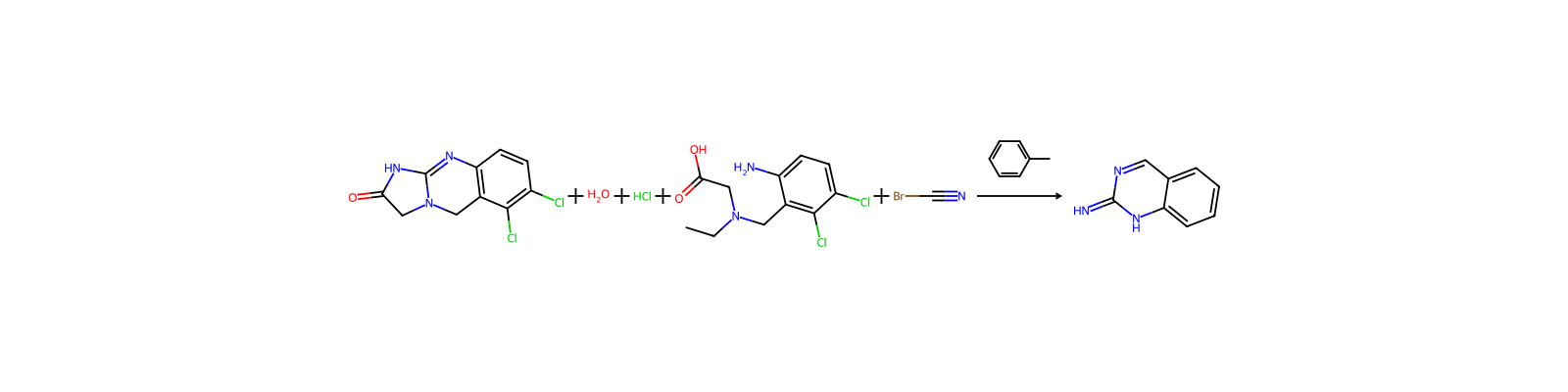
[CH:1]1[C:6]2[N:7]=[C:8]3[N:13]([CH2:14][C:5]=2[C:4](Cl)=[C:3](Cl)[CH:2]=1)CC(=O)[NH:9]3.O.Cl.C(N(CC1C(N)=CC=C(Cl)C=1Cl)CC(O)=O)C.N#CBr>C1(C)C=CC=CC=1>[NH:9]=[C:8]1[N:13]=[CH:14][C:5]2[C:6](=[CH:1][CH:2]=[CH:3][CH:4]=2)[NH:7]1参加物
6



実験手順
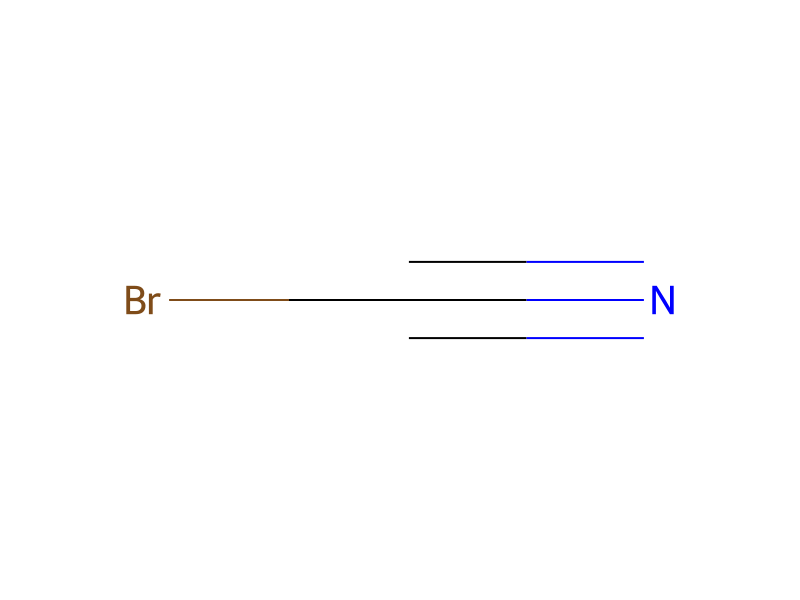
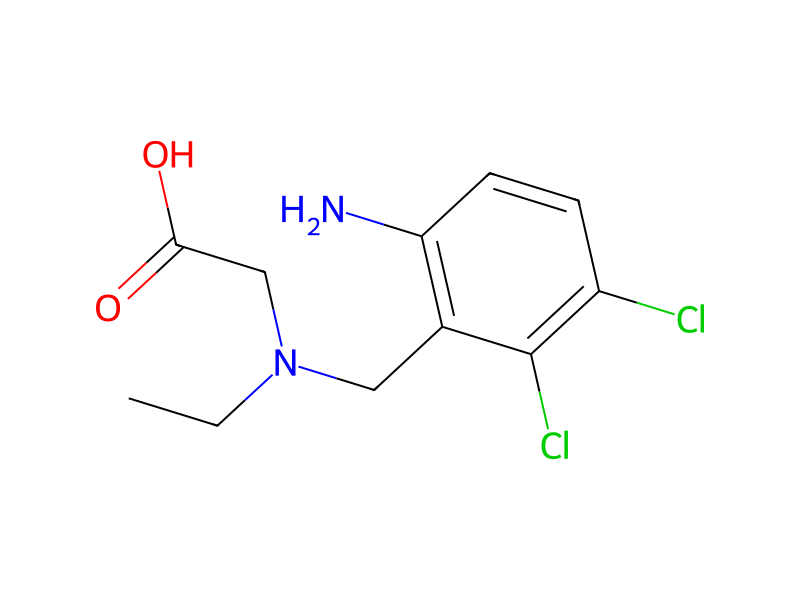
Commercially, as discussed in U.S. Pat. No. 5,801,245, and as shown in Scheme 1 below, anagrelide has been prepared as the hydrochloride monohydrate (compound IV) from the intermediate, ethyl-N-(6-amino-2,3-dichlorobenzyl)glycine (compound I), either by reaction with cyanogen bromide in hot alcoholic solution, or, preferentially, by reaction with cyanogen bromide in an aprotic solvent such as toluene to give the iminoquinazoline intermediate (compound II), which is isolated and then reacted with a base in a hot solution of alcohol to form anagrelide base (compound III).
出典と根拠
- ORDレコード
- ord-1ab8ad0e7f384b0191570b857b431b25
- 出典データセット
- uspto-grants-2015_06
- 特許番号
- US09067944B2
関連ノート
読み込み中…