3-Chloro-4-fluoroaniline → 2-Bromo-6-(4-chloro-2-fluoro-phenyl)-5-(2,5-dimethyl-2H-pyrazol-3-yl)-1-isopropyl-5,6-dihydro-1H-pyrrolo[3,4-b]pyrrol-4-one
HRID 2204351
反応式

[CH3:1][N:2]1[C:6]([NH2:7])=[CH:5][C:4]([CH3:8])=[N:3]1.C[O:10][C:11]([C:13]1[CH:17]=[C:16]([Br:18])[N:15]([CH:19]([CH3:21])[CH3:20])[C:14]=1[CH:22]([C:24]1[CH:29]=[CH:28][C:27]([Cl:30])=[CH:26][C:25]=1[F:31])O)=O.ClC1C=C(C=CC=1F)N.COC(C1C=C(Br)N(C(C)C)C=1C(C1C=CC(Cl)=CC=1)O)=O.O(S(C)(=O)=O)S(C)(=O)=O>CCN(CC)CC>[Br:18][C:16]1[N:15]([CH:19]([CH3:21])[CH3:20])[C:14]2[CH:22]([C:24]3[CH:29]=[CH:28][C:27]([Cl:30])=[CH:26][C:25]=3[F:31])[N:7]([C:6]3[N:2]([CH3:1])[N:3]=[C:4]([CH3:8])[CH:5]=3)[C:11](=[O:10])[C:13]=2[CH:17]=1参加物
7
反応物 5
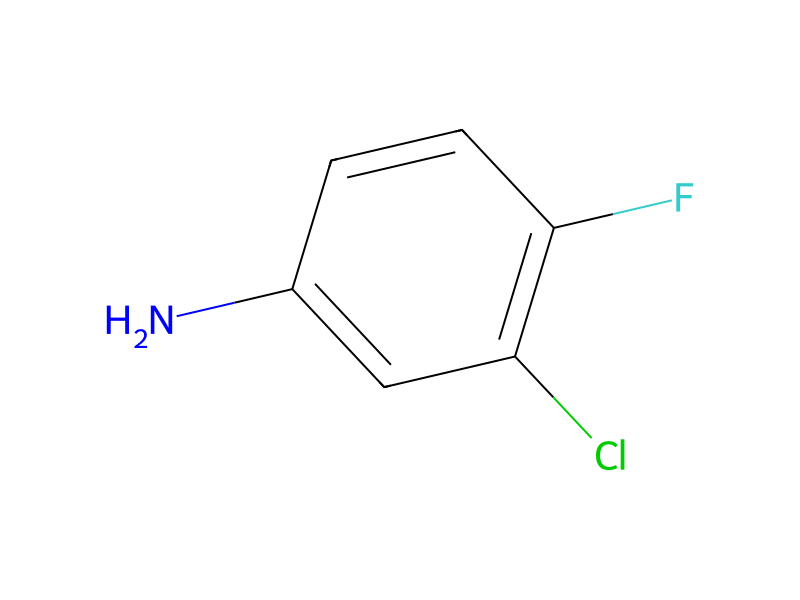 HCID 97083-Chloro-4-fluoroaniline
 HCID 81560Methanesulfonic anhydride
 HCID 5207211,3-Dimethyl-1H-pyrazol-5-amine
 HCID 867031015-bromo-2-[(4-chloro-phenyl)-hydroxy-methyl]-1-isopropyl-1H-pyrrole-3-carboxylic acid methyl ester
 HCID 867031585-bromo-2-[(4-chloro-2-fluoro-phenyl)-hydroxy-methyl]-1-isopropyl-1H-pyrrole-3-carboxylic acid methyl ester

