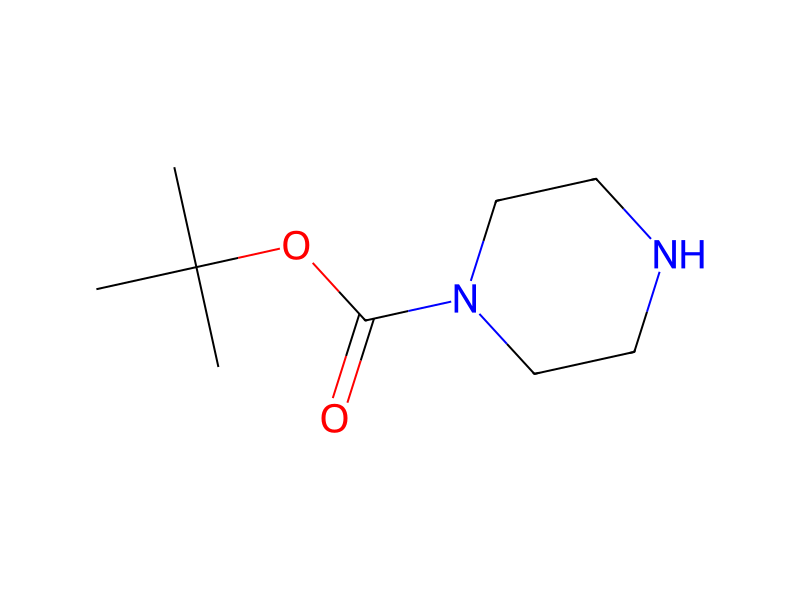
Cl[C:2]1[C:3]2[CH:11]=[C:10]([F:12])[N:9]=[CH:8][C:4]=2[N:5]=[CH:6][N:7]=1.FC1N=CC2N=CNC(=O)C=2C=1.C(N(CC)CC)C.[C:32]([O:36][C:37]([N:39]1[CH2:44][CH2:43][NH:42][CH2:41][CH2:40]1)=[O:38])([CH3:35])([CH3:34])[CH3:33]>[Cl-].[Na+].O.C(Cl)Cl>[C:32]([O:36][C:37]([N:39]1[CH2:44][CH2:43][N:42]([C:2]2[C:3]3[CH:11]=[C:10]([F:12])[N:9]=[CH:8][C:4]=3[N:5]=[CH:6][N:7]=2)[CH2:41][CH2:40]1)=[O:38])([CH3:35])([CH3:33])[CH3:34]According to the method described in J. Med. Chem., 39:1823-1835 (1996), 4-chloro-6-fluoropyrido[3,4-d]pyrimidine was derived from 6-fluoropyrido[3,4-d]pyrimidine-4(3H)-one (1.48 g, 8.96 mmol). Triethylamine (3.75 mL, 26.9 mmol) and N-tert-butoxycarbonylpiperazine (2.00 g, 10.7 mmol) were added to a methylene chloride solution (25 mL) of this partially purified product, followed by stirring at room temperature overnight. Saturated brine was added to the reaction solution, the mixture ma was extracted with chloroform, the extract was dried over anhydrous sodium sulfate, then the solvent was evaporated and the resulting residue was purified by silica gel column chromatography to give the target compound (1.73 g, 5.20 mmol).