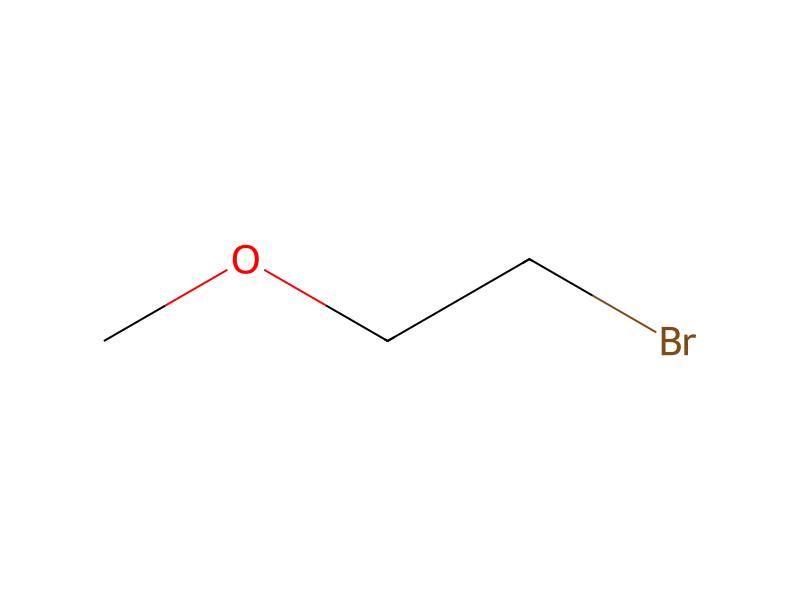
N-BOC-(R)-2-(3-bromo-4-hydroxybenzyl)morpholine, example 4, intermediate (a), (70 mg, 0.19 mmo) was dissolved in acetone (1.5 mL) and treated with potassium carbonate (78 mg, 0.56 mmol) and 2-bromoethylmethyl ether (78 mg, 0.56 mmol) was added and the resulting reaction was shaken at 55° C. for 16 hrs. The reaction was filtered and concentrated under a flow of nitrogen. The crude residue was dissolved in tetrahydrofuran (8 mL) with polymer supported diphenylphosphine (0.5 g) and shaken for 4 hrs. The reaction was then filtered and concentrated under a high flow of nitrogen. The crude residue was dissolved in TFA (20% v/v solution in dichloromethane, 2.5 mL) and shaken for 3 hrs at room temperature. The reaction mixture was added directly to an SCX-2 column (2 g) and washed with dichloromethane (2 mL×2) and methanol (2 mL×2). The SCX-2 column was then washed with ammonia (2N in methanol, 3×2 mL). Combined ammonia washes were concentrated in vacuo to yield the desired morpholine example 36 as a colorless oil (31 mg).