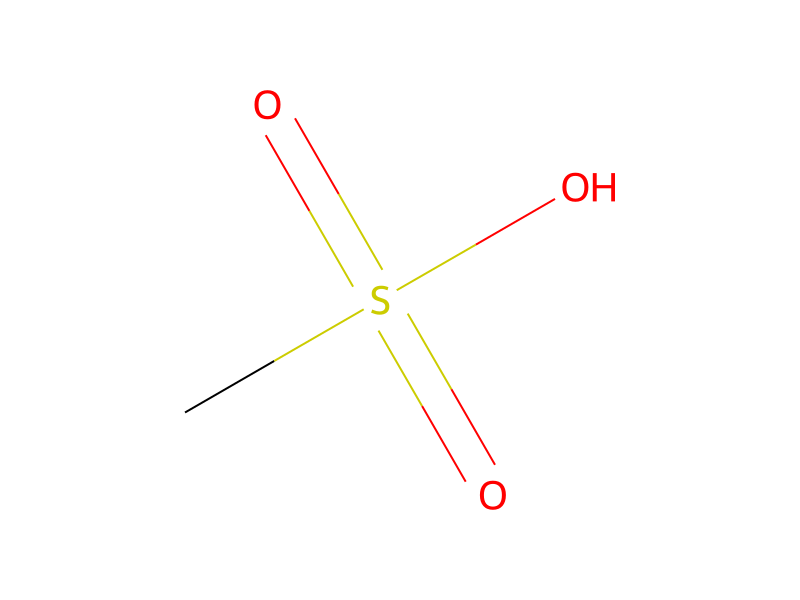
Methanesulfonic Acid → 2-Chloro-9,9-dimethyl-9,10-dihydroacridine
HRID 2277362
反応式

[Cl:1][C:2]1[CH:7]=[CH:6][C:5]([NH:8][C:9]2[CH:14]=[CH:13][CH:12]=[CH:11][C:10]=2[C:15](O)([CH3:17])[CH3:16])=[CH:4][CH:3]=1.CS(O)(=O)=O>C1(C)C=CC=CC=1>[Cl:1][C:2]1[CH:7]=[CH:6][C:5]2[NH:8][C:9]3[C:10](=[CH:11][CH:12]=[CH:13][CH:14]=3)[C:15]([CH3:17])([CH3:16])[C:4]=2[CH:3]=1参加物
4



実験手順
30.3 g (116 mmol) of 2-[2-(4-chlorophenylamino)phenyl]propan-2-ol are dissolved in 700 ml of degassed toluene, a suspension of 93 g of polyphosphoric acid and 61.7 g of methanesulfonic acid is added, and the mixture is stirred at room temperature for 1 h and heated at 50° C. for 1 h. The batch is cooled and poured onto ice and extracted three times with ethyl acetate. The combined organic phases are washed with saturated sodium chloride solution, dried over magnesium sulfate and evaporated. Filtration of the crude product through silica gel with heptane/ethyl acetate (20:1) gives 25.1 g (89%) of 2-chloro-9,9-dimethyl-9,10-dihydroacridine as pale-yellow crystals.