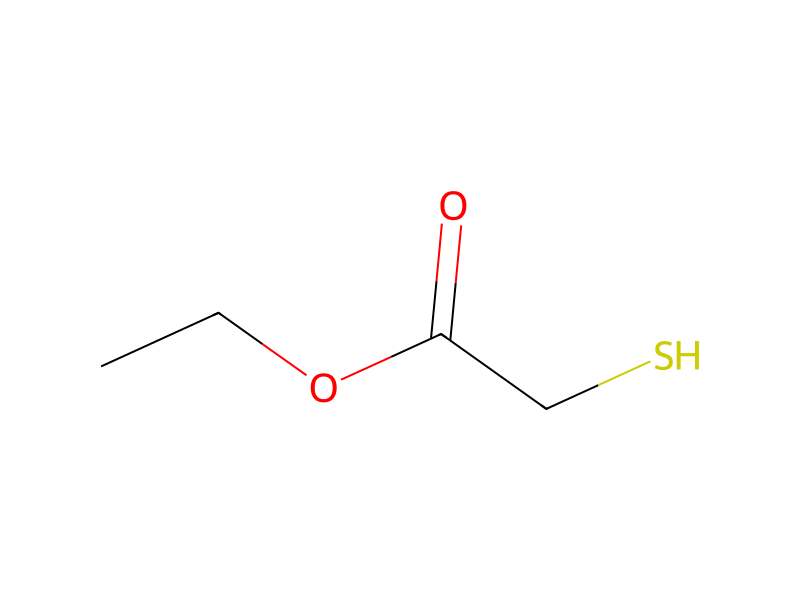
43.2 g (0.2 mol) of p-nitrobenzyl bromide, 200 ml of acetone, 0.2 g of potassium iodide, 24 ml of ethyl thioglycollate (that is to say a slight excess) and 27.6 g (0.2 mol) of potassium carbonate are introduced successively into a 1 liter three-necked flask. The mixture is heated under reflux for about 4 hours until the complete disappearance of the bromo derivative; the acetone is evaporated, the oil obtained is taken up in ether and in water, the ether phase is washed with a dilute NaOH solution, so as to eliminate the excess thiol, and then with a dilute HCl solution, and is dried over Na2SO4, and the solvent is evaporated. 49 g (yield: 95%) of the stated product are obtained, which is in the form of an orange-coloured oil.