Triethylamine → tert-Butyl 4-(6-chloropyrimidin-4-yl)piperazine-1-carboxylate
HRID 2289552
反応式

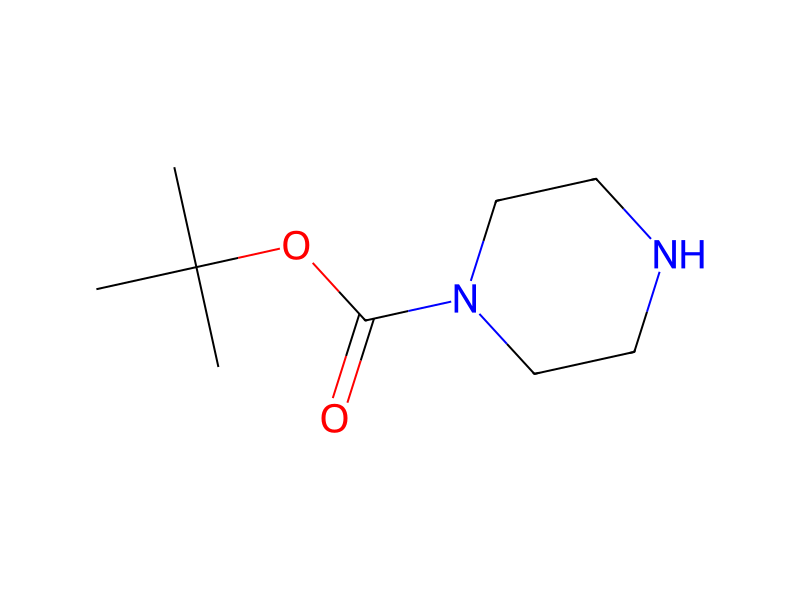
Cl[C:2]1[CH:7]=[C:6]([Cl:8])[N:5]=[CH:4][N:3]=1.[C:9]([O:13][C:14]([N:16]1[CH2:21][CH2:20][NH:19][CH2:18][CH2:17]1)=[O:15])([CH3:12])([CH3:11])[CH3:10].C(N(CC)CC)C>C(O)C>[C:9]([O:13][C:14]([N:16]1[CH2:21][CH2:20][N:19]([C:2]2[CH:7]=[C:6]([Cl:8])[N:5]=[CH:4][N:3]=2)[CH2:18][CH2:17]1)=[O:15])([CH3:12])([CH3:10])[CH3:11]参加物
5




実験手順
A solution of 4,6-dichloropyrimidine (10.05 g), tert-butoxycarbonylpiperazine (11.94 g) and triethylamine (28.20 ml) in ethanol (150 ml) was heated at reflux for 18 hours. Solvent was evaporated and the residue dissolved in ethyl acetate and washed with water, saturated aqueous ammonium chloride solution, dried (Na2SO4) and evaporated. Recrystallisation from ethyl acetate/hexane gave, as a solid 1-(tert-butoxycarbonyl)-4-(6-chloro-pyrimidin-4-yl)piperazine (16.80 g).