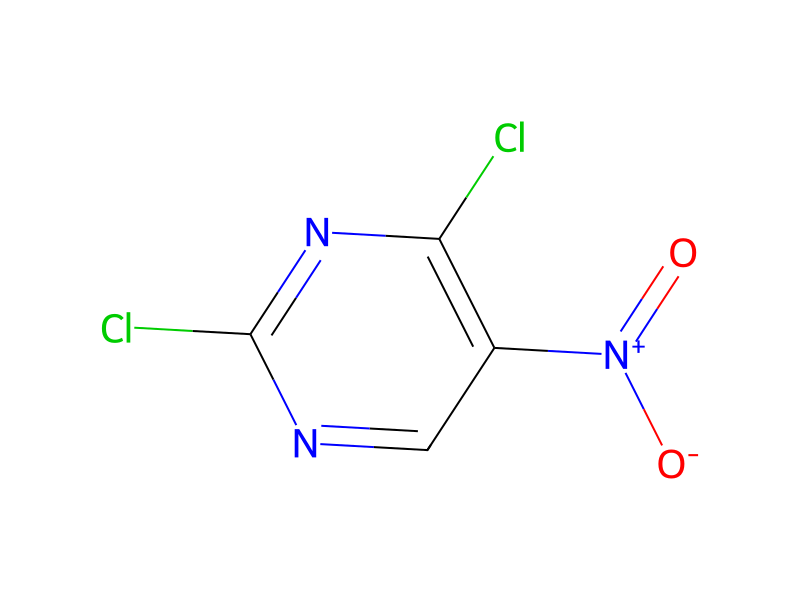
[CH:1]1([NH:6][C@@H:7]([CH2:12][CH3:13])[C:8]([O:10][CH3:11])=[O:9])[CH2:5][CH2:4][CH2:3][CH2:2]1.C(=O)(O)[O-].[Na+].[Cl:19][C:20]1[N:25]=[C:24](Cl)[C:23]([N+:27]([O-:29])=[O:28])=[CH:22][N:21]=1.ClCCl>C1CCCCC1>[Cl:19][C:20]1[N:25]=[C:24]([N:6]([CH:1]2[CH2:2][CH2:3][CH2:4][CH2:5]2)[C@@H:7]([CH2:12][CH3:13])[C:8]([O:10][CH3:11])=[O:9])[C:23]([N+:27]([O-:29])=[O:28])=[CH:22][N:21]=1Methyl (2S)-2-(cyclopentylamino)butanoate 41c (17.36 g, 93.69 mmol) was dissolved in 180 mL of cyclohexane followed by the addition of sodium bicarbonate (31.48 g, 0.37 mol) and 2,4-dichloro-5-nitro-pyrimidine (21.81 g, 0.11 mol) successively. The reaction solution was heated to 85° C. and stirred for 2 hours. The resulting solution was cooled down to room temperature, added with 300 mL of dichloromethane, then dried over anhydrous magnesium sulfate, filtered and the filtrate was concentrated under reduced pressure. The resulting residue was purified by silica gel column chromatography with elution system B to obtain the title compound methyl (2S)-2-[(2-chloro-5-nitro-pyrimidin-4-yl)-cyclopentyl-amino]butanoate 41d (14.24 g, yield: 44.3%) as a yellow solid.