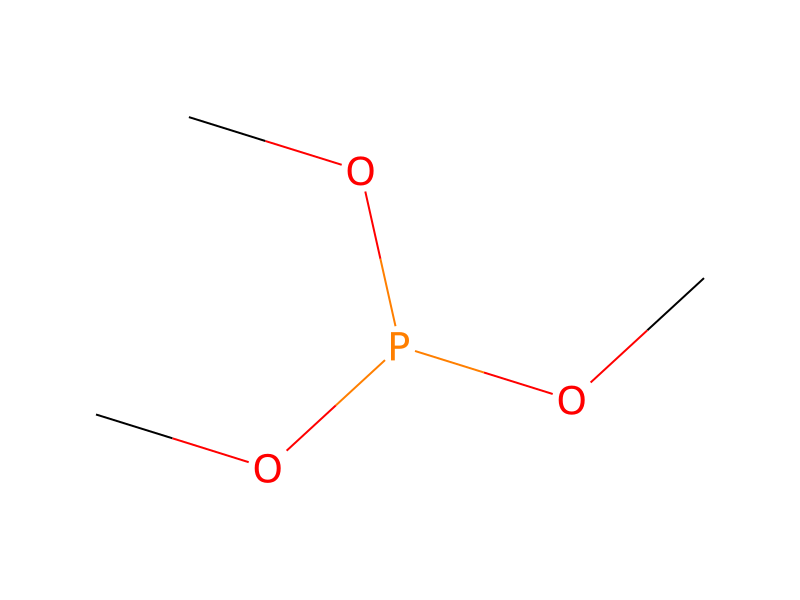
Trimethyl phosphite → [2,3-Naphthalenediylbis(methylene)]bisphosphonic acid tetramethyl ester
HRID 2379027
反応式

Br[CH2:2][C:3]1[C:12]([CH2:13]Br)=[CH:11][C:10]2[C:5](=[CH:6][CH:7]=[CH:8][CH:9]=2)[CH:4]=1.C[O:16][P:17]([O:20][CH3:21])[O:18][CH3:19]>C1(C)C=CC=CC=1>[CH3:19][O:18][P:17]([CH2:2][C:3]1[C:12]([CH2:13][P:17](=[O:16])([O:20][CH3:21])[O:18][CH3:19])=[CH:11][C:10]2[C:5]([CH:4]=1)=[CH:6][CH:7]=[CH:8][CH:9]=2)(=[O:16])[O:20][CH3:21]参加物
4



実験手順
A flask is charged with 2,3-bis(bromomethyl)naphthalene (Example 22(b), 2.80 g, 8.9 mmol) and toluene (50 mL). The solution is heated at reflux and 25 mL of the toluene is collected in a Dean-Stark trap. The solution is then cooled to room temperature and trimethylphosphite (4.0 mL, 0.034 mol) is added. The reaction is heated to reflux temperature for 24 hours. The excess trimethylphosphite and toluene are removed at reduced pressure, giving a white solid (3.24 g). The solid is recrystallized from ethyl acetate-hexane to give 2.55 g of white crystals, mp 119.5°-120.5° C.