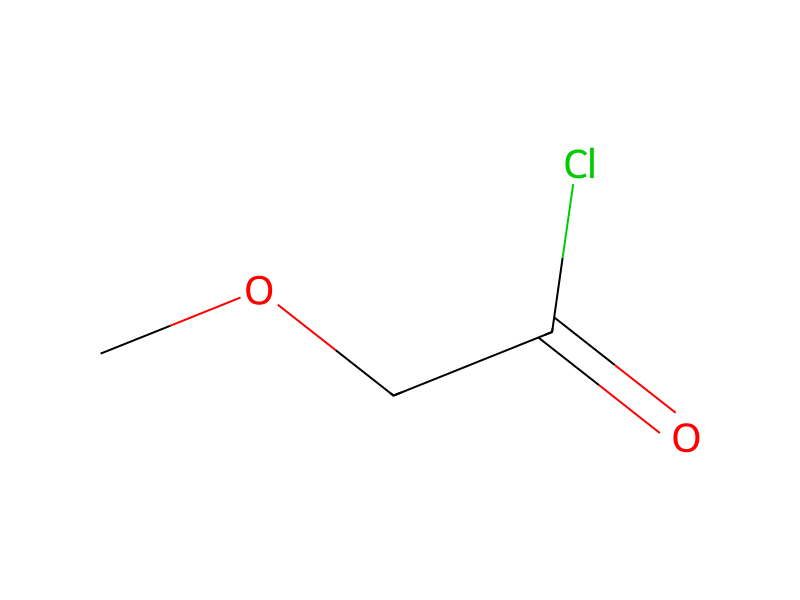
Over 2 hours, 113 g (1.04 moles) of methoxyacetyl chloride are added at 60°-70° C. and under a pressure of 70°-80 mbar to a suspension of 205 g (1.0 mole) of N-(2-oxotetrahydro-3-furyl)-2,6-dimethylaniline in 500 ml of xylene. Towards the end of the addition of methoxyacetyl chloride the reaction mixture begins to boil, with hydrogen chloride gas evolving. When the addition of methoxyacetyl chloride is complete, the reaction mixture is stirred for 3 hours under weak reflux at 60°-65° C. and under a pressure of 70-80 mbar, and the hydrogen chloride evolving during the reaction is removed. Subsequently, half of the xylene is distilled off, the reaction mixture is cooled to 20° C., the precipitated product is filtered off, washed with xylene and dried, affording 263 g (95% of theory) of N-methoxyacetyl-N-(2-oxotetrahydro-3-furyl)-2,6-dimethylaniline with a melting point of 118°-120° C.