Ethyl bromopyruvate → HCID 59321593、化合物
反応式

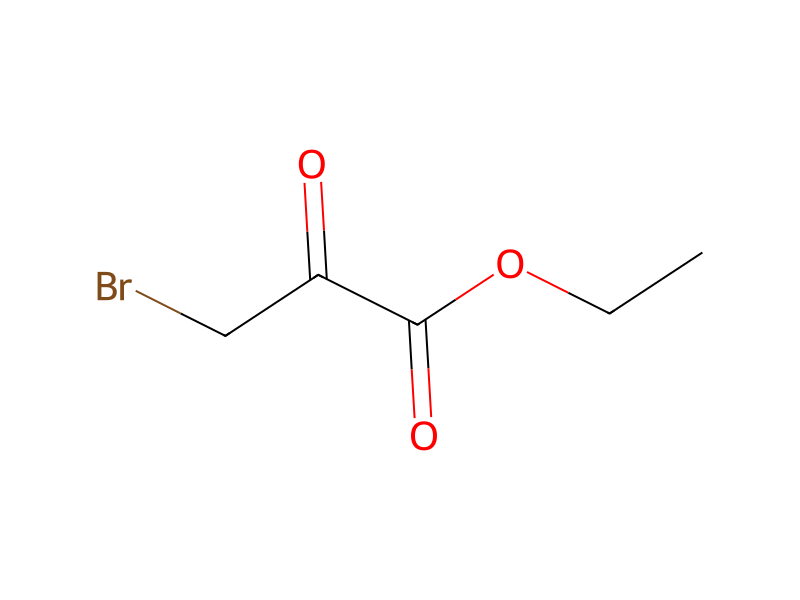
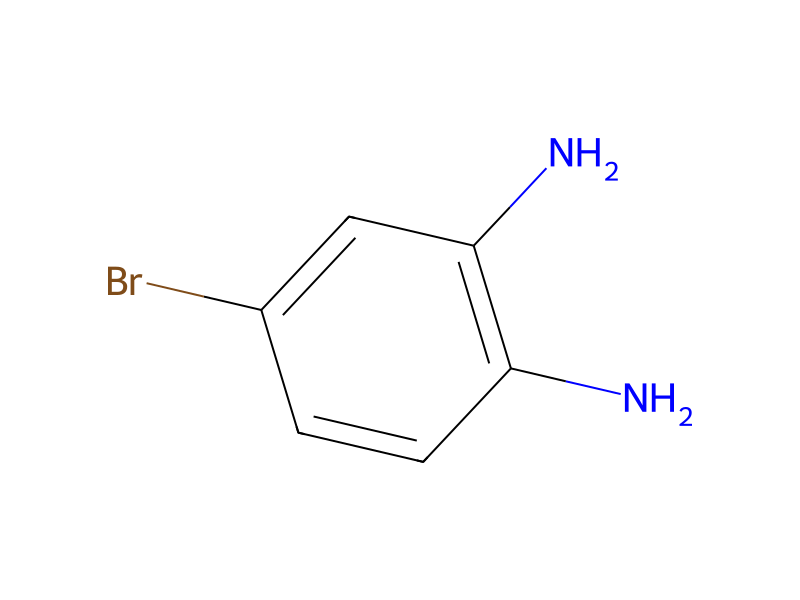
[Br:1][C:2]1[CH:7]=[CH:6][C:5]([NH2:8])=[C:4]([NH2:9])[CH:3]=1.Br[CH2:11][C:12](=O)[C:13]([O:15][CH2:16][CH3:17])=[O:14]>CN1CCCC1=O>[Br:1][C:2]1[CH:3]=[C:4]2[C:5](=[CH:6][CH:7]=1)[N:8]=[C:12]([C:13]([O:15][CH2:16][CH3:17])=[O:14])[CH:11]=[N:9]2参加物
4


実験手順
To a stirred solution of 4-bromo-o-phenylenediamine (3.1 g, 16.6 mmol) in 1-methyl-2-pyrrolidinone (150 mL) was added dropwise ethyl bromopyruvate at room temperature under nitrogen. After 20 hours, the reaction mixture was partitioned between water and diethyl ether. The organic phase was separated and the aqueous phase was extracted with diethyl ether twice more. The organic extracts were combined, washed twice with water, dried over magnesium sulfate, filtered, and the filtrate was concentrated to give an oil. The crude product was partially purified by flash chromatography over silica with dichloromethane to give a tan solid. The impure product was purified on a Chiralpak AS-H column with 95% carbon dioxide at 140 bar at 35° C. and 2 mL/min with 5% co-solvent (methanol:chloroform (80:20) to give 0.614 g (13%) of ethyl 6-bromo-2-quinoxalinecarboxylate as a tan solid. 1H NMR (CDCl3, 400 MHz): δ 9.52 (s, 1H), 8.37 (d, J=2 Hz, 1H), 8.16 (d, J=9 Hz, 1H), 7.93 (dd, J=9, 2 Hz, 1H), 4.59 (quartet, J=7 Hz, 2H), 1.50 (t, J=7 Hz, 3H). ESI-LCMS m/z 281 (M+H)+.