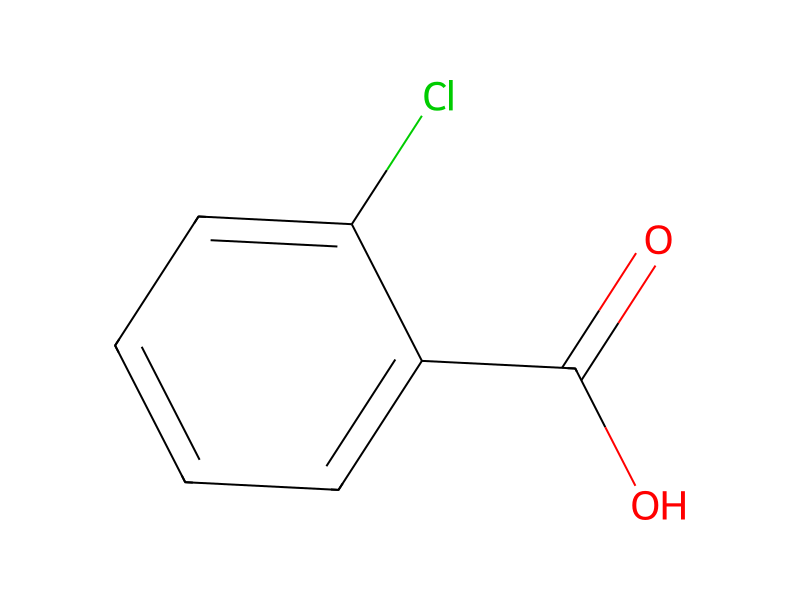
Oxygen → 2-Chlorobenzoic Acid
反応式

Cl[C:2]1C=C[CH:5]=[CH:4][C:3]=1C.[CH2:9]([CH:11]1[O:13][CH2:12]1)[Cl:10].[O:14]=O>CCCCC(C([O-])=O)CC.CCCCC(C([O-])=O)CC.[Co+2]>[Cl:10][C:9]1[CH:5]=[CH:4][CH:3]=[CH:2][C:11]=1[C:12]([OH:13])=[O:14]参加物
5




反応条件
- 温度
- 155 °C
実験手順
Into the column were charged 453 grams (3.58 moles) of o-chlorotoluene, 2.25 grams of cobalt octoate (6% Co), and 1.0 gram of epichlorohydrin. The reaction mixture was heated to 155° C. and maintained at that temperature while oxygen was bubbled through it at the rate of 300 ml./min. An additional 1.0 gram of epichlorohydrin was added to the reaction mixture every two hours during the oxidation. Throughout the reaction period, the gases leaving the column remained non-acidic. At the end of 14 hours, when 35 grams of water had been collected, the reaction mixture was removed from the column, cooled to 75° C. and extracted with 600 grams of 10 percent aqueous sodium hydroxide solution. The layers that formed were separated. The aqueous layer was diluted with water to a volume of 1500 ml. and then acidified with hydrochloric acid. The o-chlorobenzoic acid that precipitated was collected, washed with water, and dried. There was obtained 177 grams (1.135 moles) of o-chlorobenzoic acid. The conversion of o-chlorotoluene to o-chlorobenzoic acid was 43 percent. The yield of o-chlorobenzoic acid, based on o-chlorotoluene reacted, was 73.8 percent.