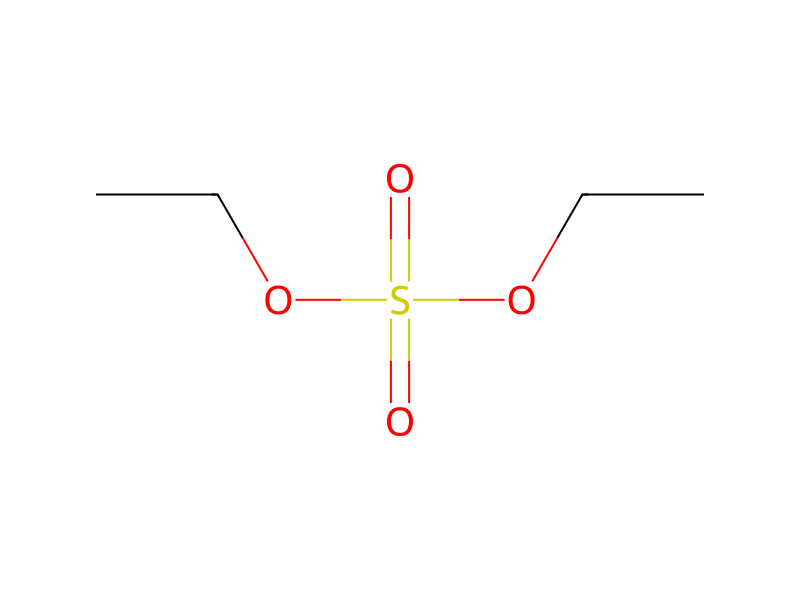
Diethyl Sulfate → HCID 53974068、化合物
HRID 261512
反応式

[Cl:1][C:2]1[CH:19]=[CH:18][CH:17]=[C:16]([Cl:20])[C:3]=1[NH:4][C:5]1[CH:10]=[CH:9][CH:8]=[CH:7][C:6]=1[C:11](=[O:15])[C:12]([OH:14])=[O:13].C(=O)([O-])[O-].[K+].[K+].S(OCC)(O[CH2:31][CH3:32])(=O)=O>CC(C)=O>[Cl:1][C:2]1[CH:19]=[CH:18][CH:17]=[C:16]([Cl:20])[C:3]=1[NH:4][C:5]1[CH:10]=[CH:9][CH:8]=[CH:7][C:6]=1[C:11](=[O:15])[C:12]([O:14][CH2:31][CH3:32])=[O:13]参加物
5




実験手順
To a solution of 12.4 g of 2-(2,6-dichloroanilino)-phenylglyoxylic acid in 80 ml of anhydrous acetone were added 6.05 g of anhydrous potassium carbonate and then 8 ml of diethyl sulfate, and the mixture was stirred at room temperature for 1 hour. The reaction mixture was filtered and washed with anhydrous acetone. The filtrate was concentrated under 100 mmHg without heating. The residue was subjected to column chromatography with silica gel (Wacogel C 200), using ether-hexane (1:2) as a developing solvent, to give ethyl 2-(2,6-dichloroanilino)phenylglyoxylate. m.p. 84.0°-85.5° C.