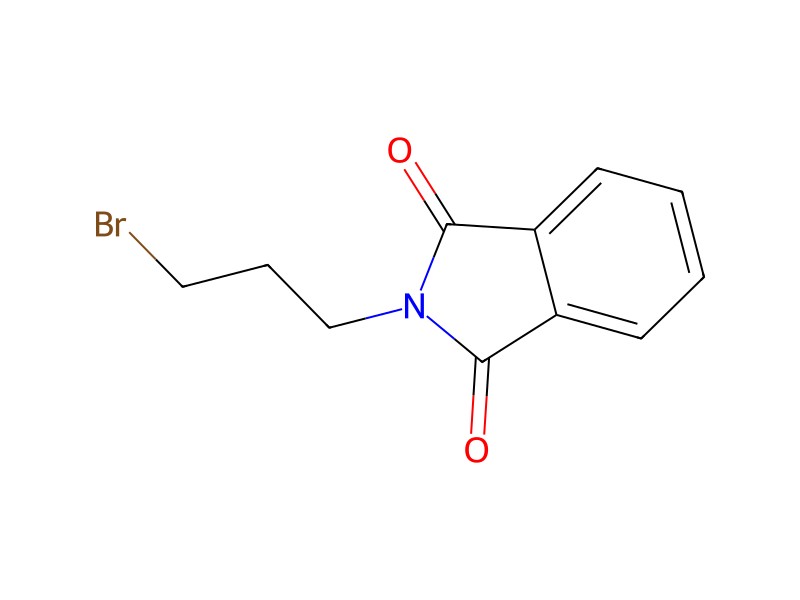
A mixture of N-(3-bromopropyl)phthalimide (26.8 g), 1-(4-chlorobenzhydryl)piperazine (28.6 g) and anhydrous potassium carbonate (13.8 g) in dimethylformamide (150 ml) was stirred at 70° C. for 2.5 hours. After being cooled to ambient temperature, the reaction mixture was poured into ice-water. The crystalline precipitate was collected by filtration, dried and dissolved in ethanol (800 ml). To the solution was added hydrazine hydrate (11.0 g) and the mixture was refluxed for 20 hours. The reaction mixture was hot-filtered and stood to cool. The obtained crystal was suspended in 10% hydrochloric acid (500 ml). The suspension was filtered and the filtrate was concentrated. The resultant residue was neutralized with aqueous sodium carbonate and extracted with chloroform. The extract was washed with water, dried and evaporated in vacuo to give 1-(3-aminopropyl)-4-(4-chlorobenzhydryl)piperazine (35.0 g) as an oil.