反応式

[C@@H:1]1([N:9]2[CH:17]=[C:15]([CH3:16])[C:13](=[O:14])[NH:12][C:10]2=[O:11])[O:8][C@H:5]([CH2:6][OH:7])[C@@H:3](O)[CH2:2]1.C1(P(C2C=CC=CC=2)C2C=CC=CC=2)C=CC=CC=1>>[CH3:16][C:15]1[C:13](=[O:14])[N:12]=[C:10]2[N:9]([C@@H:1]3[O:8][C@H:5]([CH2:6][OH:7])[C@H:3]([O:11]2)[CH2:2]3)[CH:17]=1参加物
3
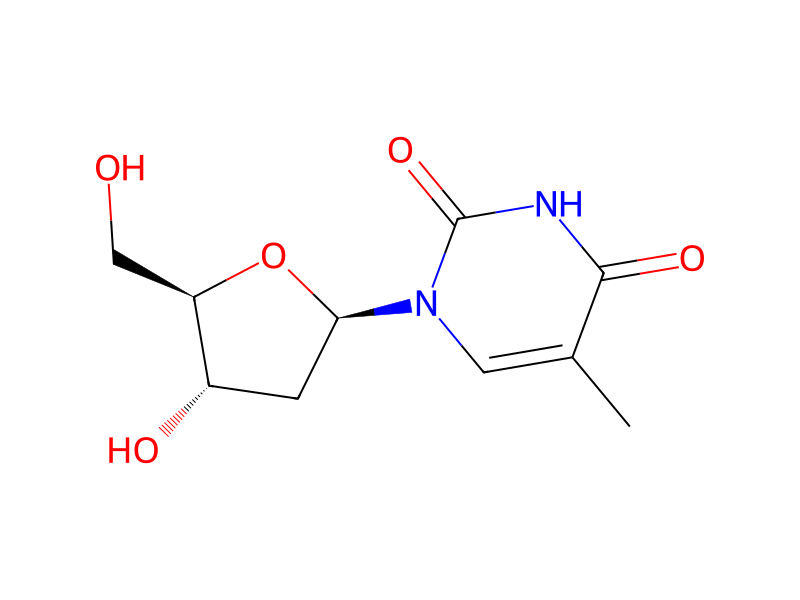


実験手順
There are a variety of known techniques for converting a nucleoside into an anhydronucleoside. For example, the anhydronucleoside can be prepared by mixing thymidine with triphenylphosphine and azeotropically drying with portions of acetonitrile (MeCN). The resulting mass is suspended in MeCN and then cooled. The mixture is rapidly stirred and diisopropylazodicarcobxylate in MeCN is added dropwise to the mixture. The resulting mixture is treated with water to form a suspension that is filtered to afford anhydrothymidine. (Grierson, J. R., Shields, A. F., Nuclear Medicine and Biology, 2000, 27 143-156; Balagopala, M. I., Ollapally, A. P., and Lee, H. J., Nucleosides-Nucleotides, 1996, 15(4) 899-906).
後処理
- dry with materialazeotropically drying with portions of acetonitrile (MeCN)
- temperaturecooled
- additionis added dropwise to the mixture
- additionThe resulting mixture is treated with water
- customto form a suspension that
- filtrationis filtered
出典と根拠
- ORDレコード
- ord-a30fca9873514a169f7249087f944381
- 出典データセット
- uspto-grants-2008_09
- 特許番号
- US07419653B2
関連ノート
読み込み中…