反応式
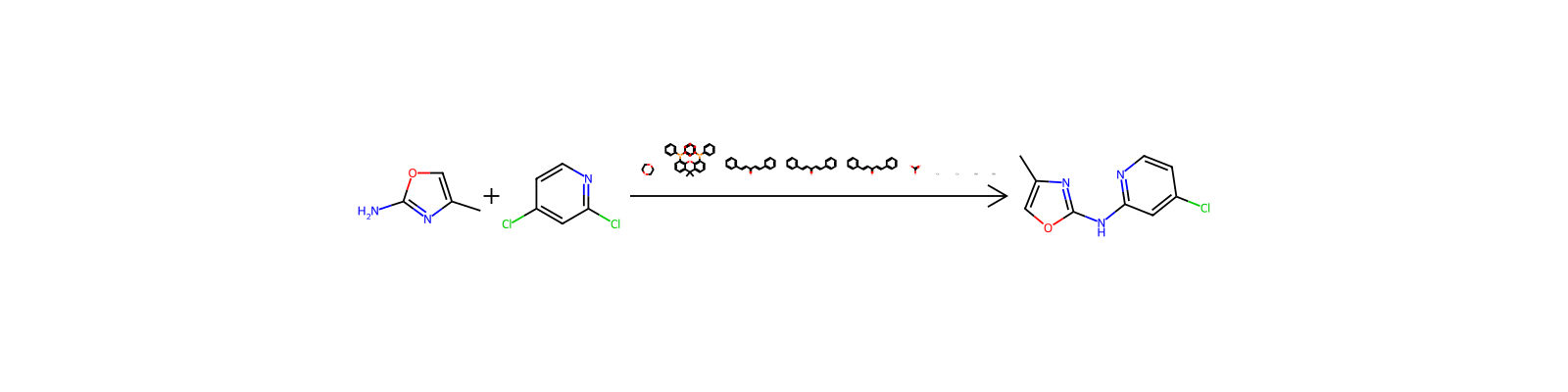
Cc1coc(N)n1.Clc1ccnc(Cl)c1>C1COCCO1.CC1(C)c2cccc(P(c3ccccc3)c3ccccc3)c2Oc2c(P(c3ccccc3)c3ccccc3)cccc21.O=C(/C=C/c1ccccc1)/C=C/c1ccccc1.O=C(/C=C/c1ccccc1)/C=C/c1ccccc1.O=C(/C=C/c1ccccc1)/C=C/c1ccccc1.O=C([O-])[O-].[Cs+].[Cs+].[Pd].[Pd]>Cc1coc(Nc2cc(Cl)ccn2)n1参加物
反応物 2
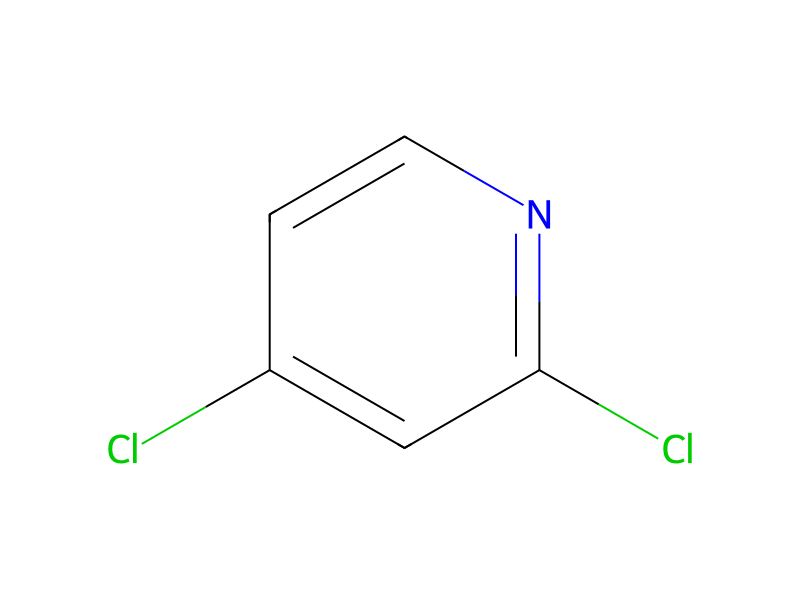

生成物 1

試薬・触媒・溶媒 4




反応条件
- 温度
- 140 °C
実験手順
Objective: To find out which substrates are efficient coupling partners, is there a robust link between how electron poor the substrate is and yield i.e. more electron poor aminooxazoles produce greater yields. Pd2(dba)3 (22.89 mg, 0.025 mmol), 9,9-dimethyl-4,5-bis(diphenylphosphino)xanthene (43.4 mg, 0.075 mmol), 2,4-dichloropyridine (148 mg, 1.00 mmol), cesium carbonate (652 mg, 2.00 mmol) and 4-methyloxazol-2-amine (98 mg, 1.00 mmol) were added to an oven dried microwave vial, the vial was capped and placed under an inert atmosphere, dioxane (4 mL) was added and the resulting mixture was heated to 140 °C for 1 h by microwave irradiation under a nitrogen atmosphere. Dichloromethane (10 mL) was added to the crude reaction mixture and the mixture was adsorbed onto silica gel. The crude product was purified by flash silica chromatography, elution gradient 0 to 30% EtOAc in heptane. Pure fractions were evaporated to dryness to afford N-(4-chloropyridin-2-yl)-4-methyloxazol-2-amine (59.0 mg, 28.1 %) as a cream solid. Note: a further 34 mg of impure product came off the column early and so the yield for this reaction is probably closer to 35% had the purification been efficient. Conclusion: Somewhat surprisingly the methyl substituted amino-oxazole gave significant amounts of coupled product. It appears that certain moderately elctron rich substrates may also undergo relatively efficient coupling.
出典と根拠
- ORDレコード
- ord-2b17d1283fc34150bab8e6391b459594
- 出典データセット
- 750 AstraZeneca ELN dataset
- 元リンク
- 出典を表示
関連ノート
読み込み中…