反応式

C1C2(N(C3C=CC=CC=3)CNC2=[O:8])CCN(CCCC(C2C=CC(F)=CC=2)=O)C1.CC([C@@]1(O)C[C@@H]2N(C[C@@H]3C4C2=CC=CC=4CCC2C=CC=CC3=2)CC1)(C)C.C[N:58]1[CH2:68][CH:67](C2C=CC=CC=2)[C:66]2[C:61](=[CH:62][C:63](Cl)=[C:64]([OH:75])[CH:65]=2)CC1.CN1C[C@H](C2C=CC=CC=2)C2C=C(O)C(Cl)=CC=2CC1>>[NH2:58][CH2:68][CH2:67][C:66]1[CH:61]=[CH:62][C:63]([OH:8])=[C:64]([OH:75])[CH:65]=1参加物
5

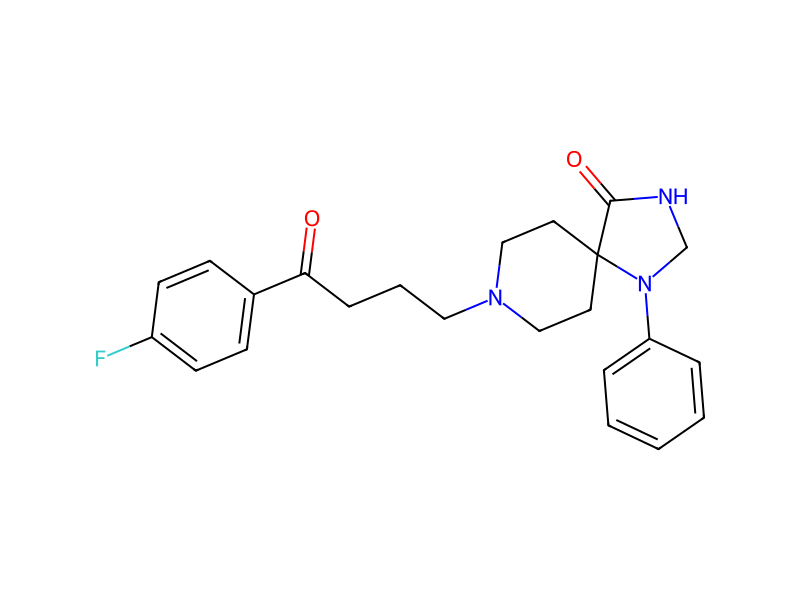


実験手順
The following tritiated drugs were used as radioligands for each of the receptors tested: [3H]-Spiperone 21-24 Ci/mmol for D2 receptors and [3H]-SCH23390 75-85 Ci/mmol for D1 receptors. The radioligands were incubated with various concentrations of competing drug and the appropriate membrane source for periods of time as follows: 75 minutes at room temperature for D2 receptors or 15 minutes at 37° C. for D1 receptors. Specific binding was defined using 1 μM butaclamol (D2) or 1 μM SCH23390 (D1). In addition, the D2 assays contained 30 nM ketaserin in order to block the binding of 3H-spiperone to 5HT2 receptors.
後処理
- concentrationThe radioligands were incubated with various concentrations
- waitthe appropriate membrane source for periods of time as follows
- custom75 minutes
- customat room temperature
- customfor D2 receptors or 15 minutes
- customat 37° C.
出典と根拠
- ORDレコード
- ord-5ce47448ae38482fa84af9f96e6a1620
- 出典データセット
- uspto-grants-1993_12
- 特許番号
- US05274003
関連ノート
読み込み中…