反応式
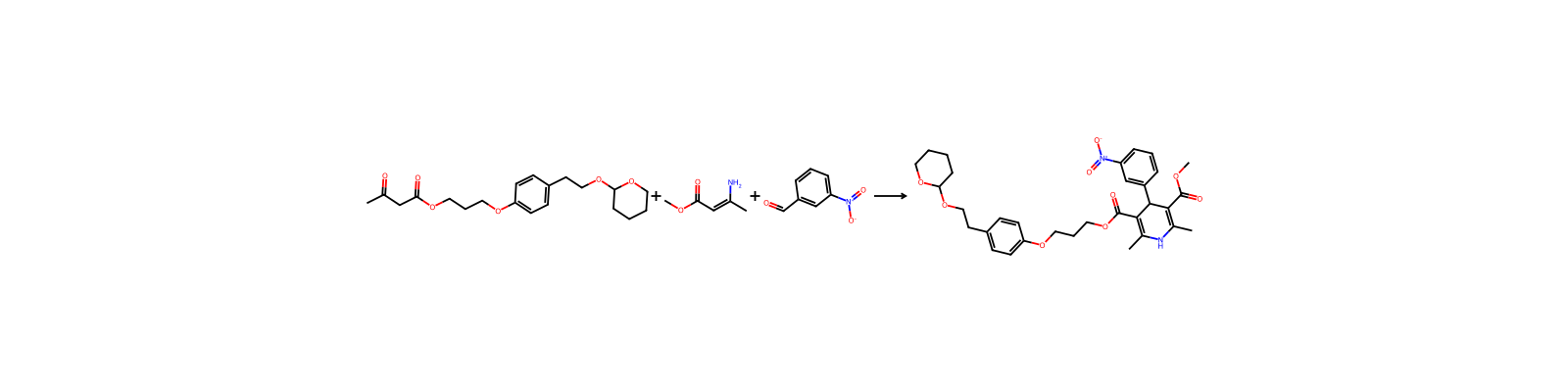
[C:1]([O:7][CH2:8][CH2:9][CH2:10][O:11][C:12]1[CH:17]=[CH:16][C:15]([CH2:18][CH2:19][O:20][CH:21]2[CH2:26][CH2:25][CH2:24][CH2:23][O:22]2)=[CH:14][CH:13]=1)(=[O:6])[CH2:2][C:3]([CH3:5])=O.[NH2:27]/[C:28](/[CH3:34])=[CH:29]\[C:30]([O:32][CH3:33])=[O:31].[N+:35]([C:38]1[CH:39]=[C:40]([CH:43]=[CH:44][CH:45]=1)[CH:41]=O)([O-:37])=[O:36]>>[CH3:34][C:28]1[NH:27][C:3]([CH3:5])=[C:2]([C:1]([O:7][CH2:8][CH2:9][CH2:10][O:11][C:12]2[CH:17]=[CH:16][C:15]([CH2:18][CH2:19][O:20][CH:21]3[CH2:26][CH2:25][CH2:24][CH2:23][O:22]3)=[CH:14][CH:13]=2)=[O:6])[CH:41]([C:40]2[CH:43]=[CH:44][CH:45]=[C:38]([N+:35]([O-:37])=[O:36])[CH:39]=2)[C:29]=1[C:30]([O:32][CH3:33])=[O:31]参加物
4


実験手順
An ω-phenylalkylacetoacetate derivative (2) is reacted with an alkyl β-aminoalkenoate (3) (for example, methyl β-aminocrotonate) and a benzaldehyde derivative of formula 4 under Hantzsch dihydropyridine synthesis conditions (see, e.g., Fox, et al., J. Org. Chem., 16, 1259 (1951)) to form a 4-phenyl-2,6-dialkyl-1,4-dihydropyridine dicarboxylate diester derivative (1). For example, 3-(4-[2-(tetrahydropyran-2-yloxy)ethyl]phenoxy)propyl acetoacetate (2) is reacted with methyl β-aminocrotonate and 3-nitrobenzaldehyde to produce 2,6-dimethyl-3-carbomethoxy-4-(3-nitrophenyl)-5-(3-[4-(2-tetrahydropyran-2-yloxyethyl)phenoxy]propoxycarbonyl)-1,4-dihydropyridine (1). (Scheme I)
出典と根拠
- ORDレコード
- ord-6b9c4eafd1894b1583f84a4c9a8e6fc3
- 出典データセット
- uspto-grants-1988_08
- 特許番号
- US04761420
関連ノート
読み込み中…