tert-Butyl carbazate → Tert-butyl 4-[(tert-butoxycarbonyl)hydrazono]piperidine-1-carboxylate
HRID 349165
反応式

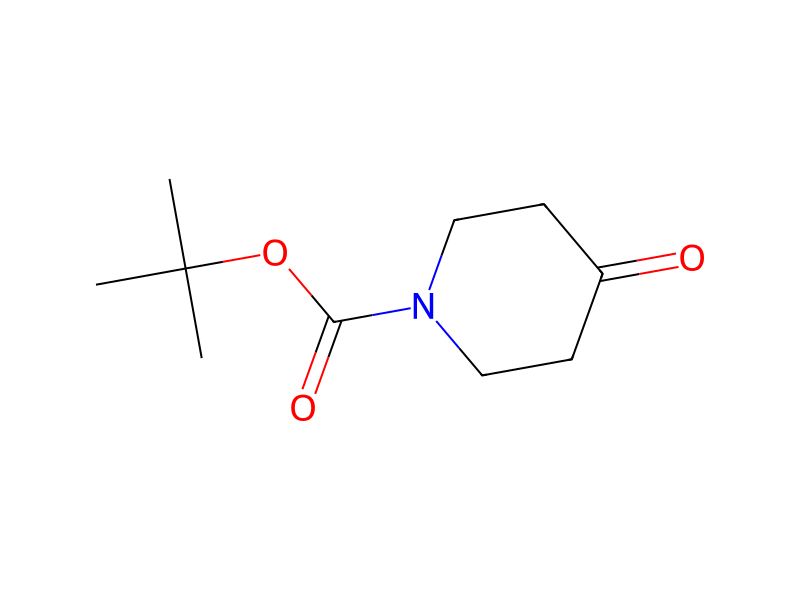
[C:1]([O:5][C:6]([N:8]1[CH2:13][CH2:12][C:11](=O)[CH2:10][CH2:9]1)=[O:7])([CH3:4])([CH3:3])[CH3:2].[C:15]([O:19][C:20](=[O:23])[NH:21][NH2:22])([CH3:18])([CH3:17])[CH3:16]>>[C:1]([O:5][C:6]([N:8]1[CH2:13][CH2:12][C:11](=[N:22][NH:21][C:20]([O:19][C:15]([CH3:18])([CH3:17])[CH3:16])=[O:23])[CH2:10][CH2:9]1)=[O:7])([CH3:4])([CH3:3])[CH3:2]参加物
3


実験手順
Reaction scheme 1 shows that the compounds of formula I can be, for example, prepared starting from 4-oxo-piperidine-1-carboxylic acid tert-butyl ester which is reacted in a first reaction step with tert-butylcarbazate to give 4-(tert-Butoxycarbonyl-hydrazono)-piperidine-1-carboxylic acid tert-butyl ester (starting compound A7). Compound A7 is reduced with, for example, the boran tetrahydrofurane complex to give 4-(N′-tert-Butoxycarbonyl-hydrazino)-piperidine-1-carboxylic acid tert-butyl ester (starting compound A6). Treatment of compound A6 with concentrated hydrochloric acid results in the formation of piperidin-4-yl-hydrazine dihydrochloride (starting compound A5).