反応式

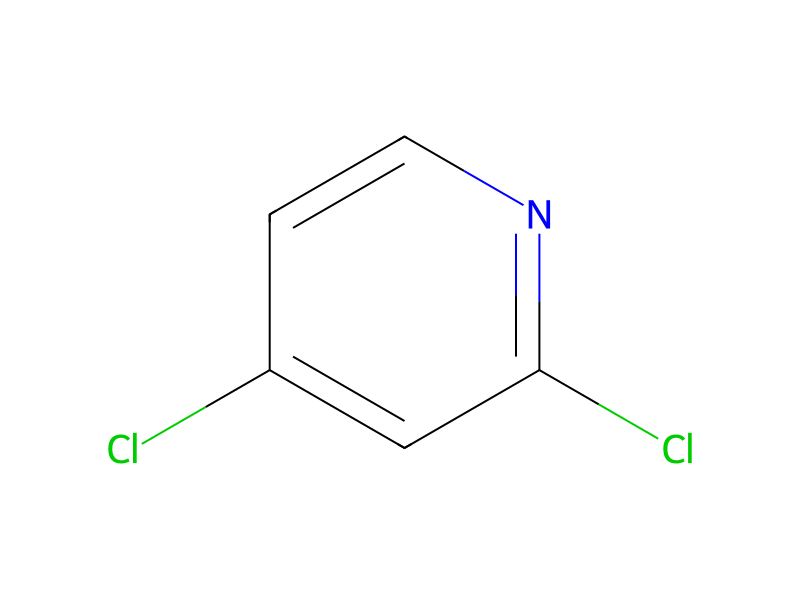
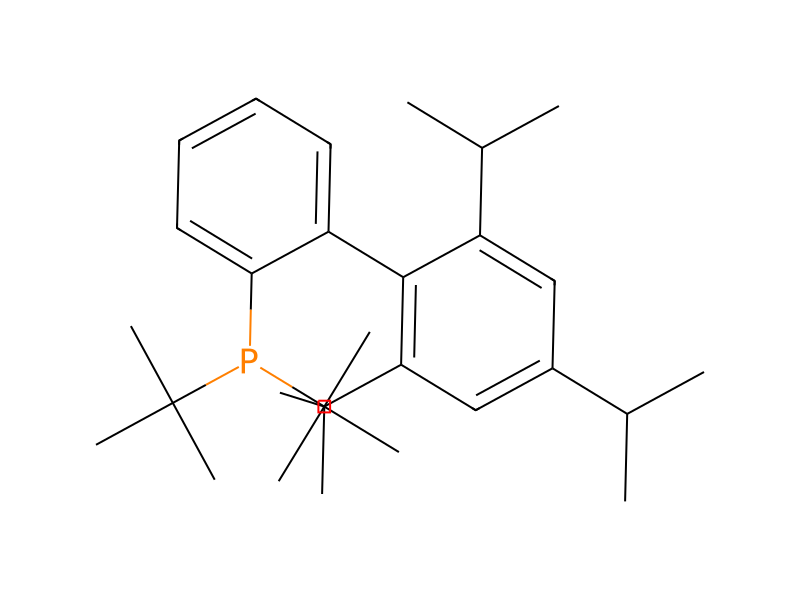
CCOC(=O)c1cnc(N)o1.Clc1ccnc(Cl)c1>C1COCCO1.CC(C)c1cc(C(C)C)c(-c2ccccc2P(C(C)(C)C)C(C)(C)C)c(C(C)C)c1.O=C(/C=C/c1ccccc1)/C=C/c1ccccc1.O=C(/C=C/c1ccccc1)/C=C/c1ccccc1.O=C(/C=C/c1ccccc1)/C=C/c1ccccc1.O=C([O-])[O-].[Cs+].[Cs+].[Pd].[Pd]>CCOC(=O)c1cnc(Nc2cc(Cl)ccn2)o1参加物
反応物 2

生成物 1

試薬・触媒・溶媒 4



反応条件
- 温度
- 160 °C
実験手順
Objective: Series of experiments to optimise yield of the above coupled product. Pd2(dba)3 (22.89 mg, 0.025 mmol), di-tert- butyl(2',4',6'-triisopropylbiphenyl-2-yl)phosphine (42.4 mg, 0.10 mmol), 2,4-dichloropyridine (148 mg, 1.00 mmol), cesium carbonate (651 mg, 2.00 mmol),ethyl 2-aminooxazole-5-carboxylate (156 mg, 1.00 mmol) and 4,4'-di-tert- butylbiphenyl (60 mg, 0.23 mmol) were added to an oven dried microwave vial, the vial was capped and placed under an inert atmosphere, dioxane (4 mL) was added and the resulting mixture was heated at 160 °C for 1 h by microwave irradiation under a nitrogen atmosphere. Crude LCMS shows a complete switch in regioselectivity, with the other isomer becoming the major product in 26% yield based on internal standard (note: this is a rough estimate as the U.V absorbance may be significantly different for this regioisomer). The regioisomeric ratio is 2.8:1 and although the product was not formed in synthetically useful yields, it is an interesting result. Conclusion: Switch in regioselectivty with the change in ligand may be worth pursuing.
出典と根拠
- ORDレコード
- ord-0fa704c187644f658d22f391e350db77
- 出典データセット
- 750 AstraZeneca ELN dataset
- 元リンク
- 出典を表示
関連ノート
読み込み中…