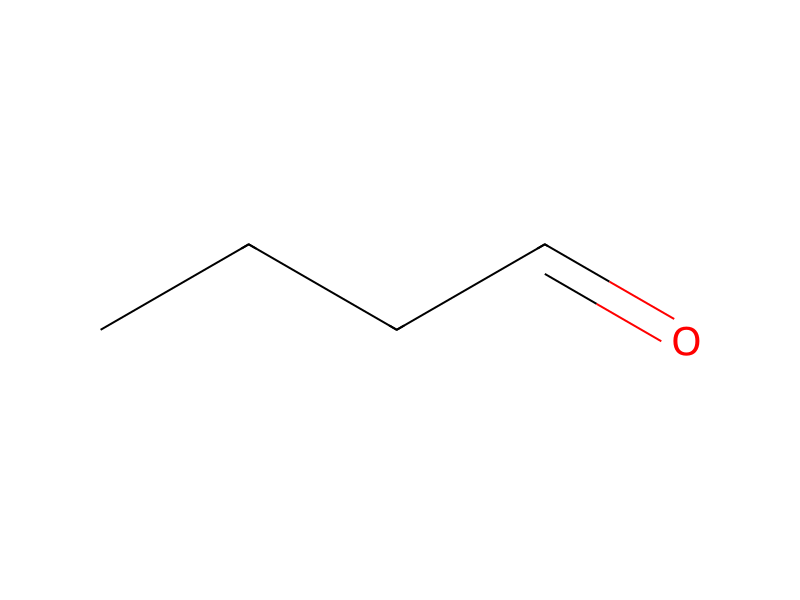
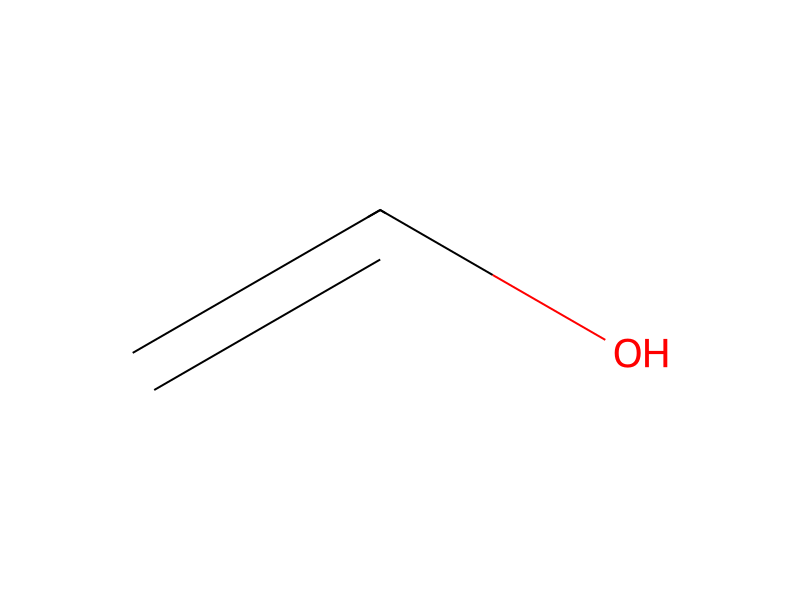
Butanal → Vinyl Acetate
HRID 354107
反応式

Cl.[CH2:2]([O:4][CH:5]([O:18]CC)[CH2:6]C[Si](OCC)(OCC)OCC)[CH3:3].C(=O)CCC>O>[CH:2]([OH:4])=[CH2:3].[C:5]([O:4][CH:2]=[CH2:3])(=[O:18])[CH3:6]Cl.[CH2:2]([O:4][CH:5]([O:18]CC)[CH2:6]C[Si](OCC)(OCC)OCC)[CH3:3].C(=O)CCC>O>[CH:2]([OH:4])=[CH2:3].[C:5]([O:4][CH:2]=[CH2:3])(=[O:18])[CH3:6]2,683 ml of distilled water, 1,114 ml of a 20% by weight HCl and 1,190 ml of a 19.7% by weight aqueous solution of a fully hydrolyzed polyvinyl alcohol, viscosity 3.68 mPas (DIN 53015; Höppler method; 4% by weight aqueous solution), were charged to a 6 liter glass reactor and cooled to −2° C. within a period of one hour, with stirring. A mixture made from 2.5 g of 3,3-diethoxypropyltriethoxysilane and 188 ml (151.6 g) of butyraldehyde, cooled in advance to −4° C., was then added over a period of 5 minutes, with an attendant rise in internal reactor temperature to −0.7° C. The mixture was then rapidly cooled again to −2° C. 3 minutes after addition of the mixture the reaction mixture, which had until then been clear, was observed to become cloudy, and the product precipitated as little as 5 minutes later. After 40 minutes reaction time at −2° C. the temperature was increased to 25° C. over a period of 3.5 hours, and this temperature was maintained for a further 2 hours. The product was then separated by suction filtration and washed with distilled water until the filtrate gave a neutral reaction. The moist product was dried to a solids content of at least 98%, initially at 22° C. and then at 35° C. in vacuo, yielding a modified polyvinyl butyral having 17.8% by weight of vinyl alcohol units, 1.5% by weight of vinyl acetate units, and 80.7% by weight of vinyl butyral units. The viscosity (DIN 53015; Höppler method; 10% by weight ethanolic solution) was 25.1 mPas. The Si content was determined to be 0.05% by weight.