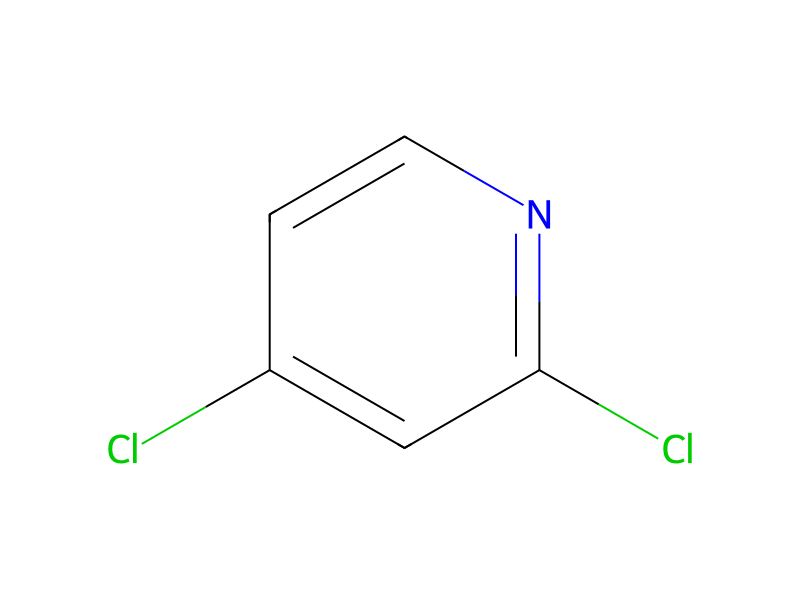
Objective: Attempt to synthesise the 4-substituted product using jackiephos as ligand. To an oven-dried microwave vial was added ethyl 2-aminooxazole-5-carboxylate (156 mg, 1.00 mmol), 2,4-dichloropyridine (0.108 mL, 1.00 mmol), cesium carbonate (651 mg, 2.00 mmol), TRIS(DIBENZYLIDENEACETONE)DIPALLADIUM(0) (22.87 mg, 0.02 mmol) and bis(3,5-bis(trifluoromethyl)phenyl)(2',4',6'-triisopropyl-3,6-dimethoxybiphenyl-2-yl)phosphine (80 mg, 0.10 mmol) and the vial was capped and purged with nitrogen. dioxane (4 mL) (degassed) was added and the reaction mixture was heated to 160 °C for 1 h under microwave irradiation. The reaction mixture was heated to 160°C for a further 3 h due to incomplete conversion. DCM (10 mL) was added to the crude reaction mixture together with silica (2 g). The solvent was then removed from the reaction mixture under reduced pressure. The resulting residue was then added tom a dry-load tube prior to chromatography. The crude product was purified by flash silica chromatography, elution gradient 0 to 2.5% methanolic ammonia (7 M) in DCM. The desired product (4-substitution) was isolated as a mixture with the 2-substituted product. The ratio of the 2-isomer to the 4-isomer is 2.4:1 for the mxture with no other fractions containing either isomer. Conclusion: The apparent higher selectivity for the 4-isomer is due to the overlap of the 2,4-dichloropyridine starting material with this isomer. Therefore this reaction actually forms the 2-isomer selectively and is not a very active catalyst for this transformation.