Tetrabutylammonium Hydroxide → Tetrabutylammonium
反応式

[I:1][C:2]1[N:10]=[C:9]([NH2:11])[N:8]=[C:7]2[C:3]=1[NH:4][CH:5]=[N:6]2.[OH-].[CH2:13]([N+:17]([CH2:26][CH2:27][CH2:28][CH3:29])([CH2:22][CH2:23][CH2:24][CH3:25])[CH2:18][CH2:19][CH2:20][CH3:21])[CH2:14][CH2:15][CH3:16]>C(Cl)Cl>[CH2:26]([N+:17]([CH2:13][CH2:14][CH2:15][CH3:16])([CH2:18][CH2:19][CH2:20][CH3:21])[CH2:22][CH2:23][CH2:24][CH3:25])[CH2:27][CH2:28][CH3:29].[I:1][C:2]1[N:10]=[C:9]([NH2:11])[N:8]=[C:7]2[C:3]=1[NH:4][CH:5]=[N:6]2参加物
5


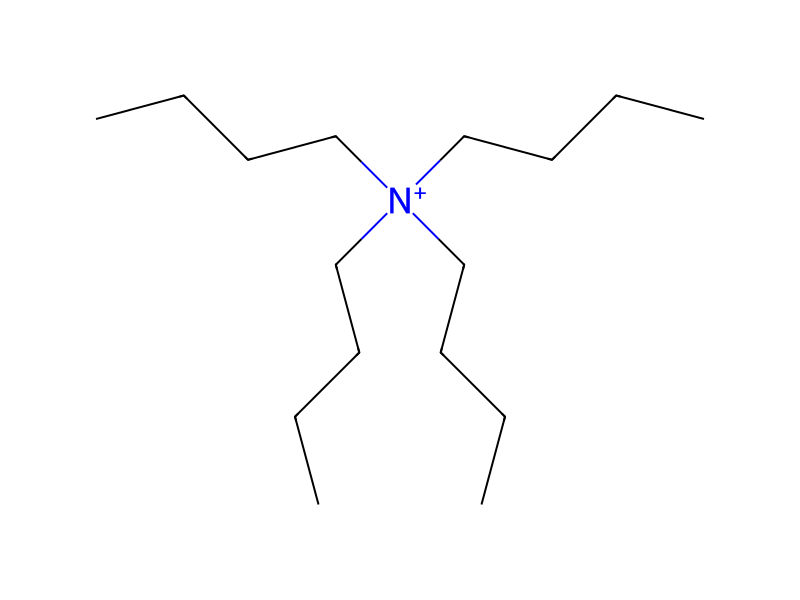

実験手順
To a mixture of 6-iodo-2-aminopurine (1.21 g., 4.637 mmole) in methylene chloride (12 ml.) at room temperature, was added 1.5M tetra (n-butyl) ammonium hydroxide (2.7 ml., 4.05 mmole). The reaction mixture was stirred for 10 minutes, and the volatiles were removed in vacuo. Methylene chloride (12 ml.) was added to the white residue, and the resulting solution was dried (magnesium sulfate), filtered, and the filtrate was concentrated in vacuo to yield the tetra (n-butyl) ammonium salt of 6-iodo-2-aminopurine as a white residue.