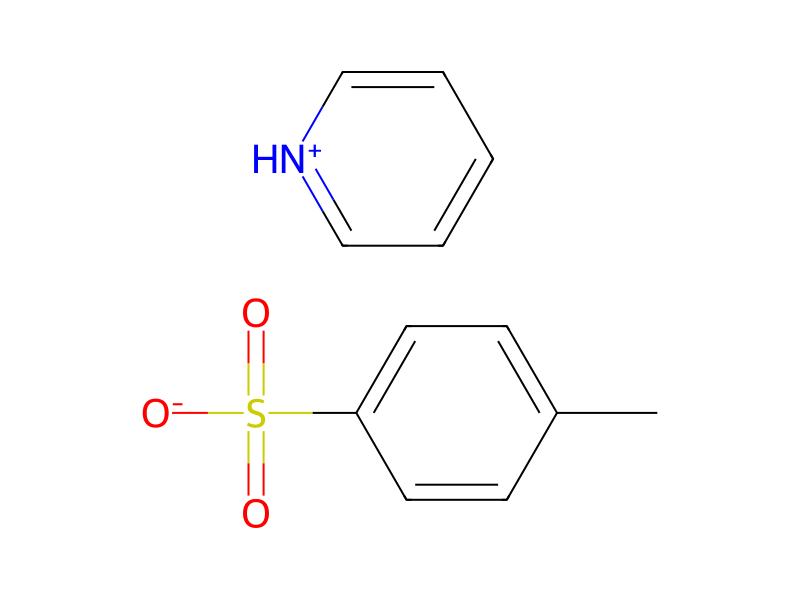
Cl.[NH2:2][C:3]1[CH:9]=[CH:8][C:6]([OH:7])=[CH:5][C:4]=1[OH:10].Cl.[N:12]1[CH:17]=[CH:16][CH:15]=[CH:14][C:13]=1[CH2:18]Cl.C1(C)C=CC(S([O-])(=O)=O)=CC=1.[NH+]1C=CC=CC=1>C(N(CC)CC)C>[N:12]1[CH:17]=[CH:16][CH:15]=[CH:14][C:13]=1[C:18]1[O:10][C:4]2[CH:5]=[C:6]([OH:7])[CH:8]=[CH:9][C:3]=2[N:2]=14-Aminoresorcinol hydrochloride (2.0 g, 12.4 mL), picolinyl chloride hydrochloride (2.4 g, 13.6 mM), triethylamine (2.8 g, 27.2 mM) and pyridinium-p-toluenesulfonate (PPTS, 800 mg, 3.2 mM) were refluxed in xylenes (50 mL) for about 72 hours. The reaction mixture was concentrated and the residue dissolved in ethyl acetate (200 mL) and washed with H2O (3×150 mL). The combined aqueous layer was back extracted with ethyl acetate (200 mL) and the combined organic layer was dried over MgSO4. Filtration and concentration provided 1.0 g. Filtration through a silica gel column eluted with 4% methanol/methylene chloride provided an orange solid, 0.32 g; m.p., 100-103° C.