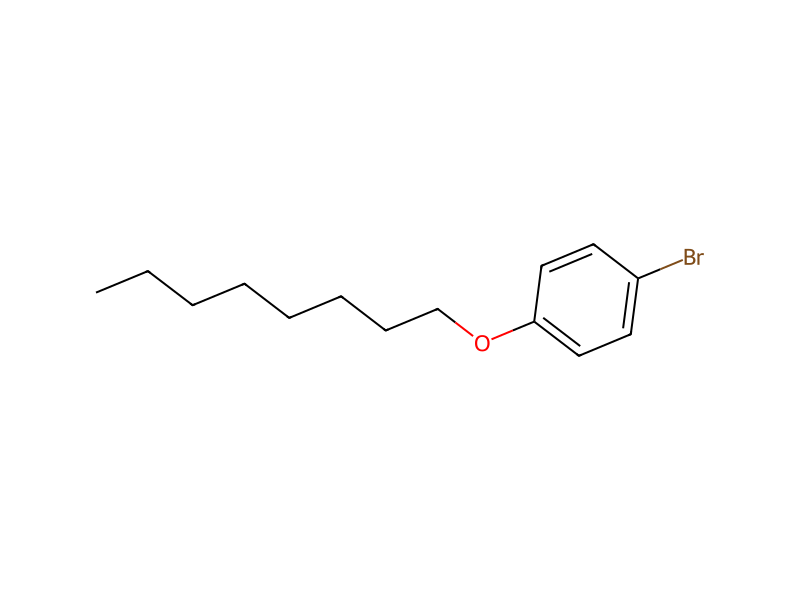
4-Bromophenol → p-Bromophenyl octyl ether
反応式

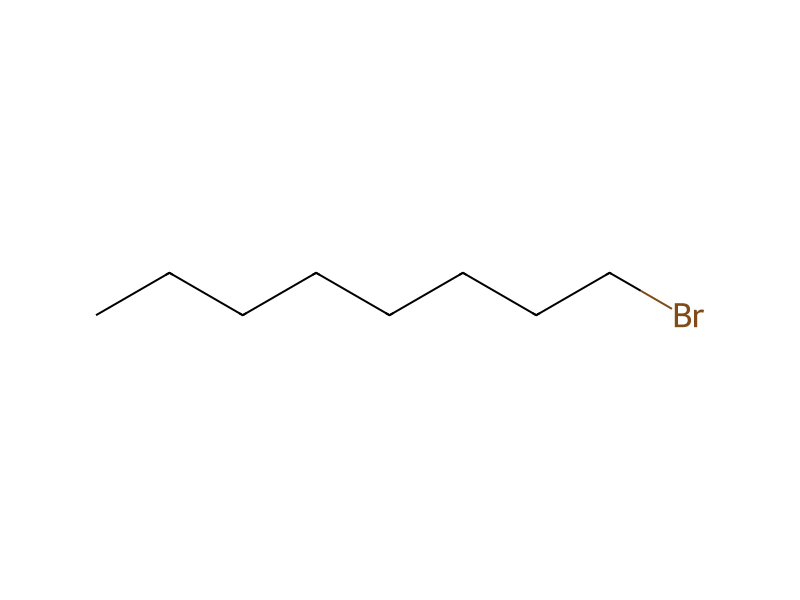
[Br:1][C:2]1[CH:7]=[CH:6][C:5]([OH:8])=[CH:4][CH:3]=1.[CH2:9](Br)[CH2:10][CH2:11][CH2:12][CH2:13][CH2:14][CH2:15][CH3:16].C(=O)([O-])[O-].[K+].[K+]>CC(C)=O>[Br:1][C:2]1[CH:7]=[CH:6][C:5]([O:8][CH2:9][CH2:10][CH2:11][CH2:12][CH2:13][CH2:14][CH2:15][CH3:16])=[CH:4][CH:3]=1参加物
5



実験手順
In 100 ml of acetone, 8.0 g of 4-bromophenol, 8.9 g of n-octylbromide, and 13 g of potassium carbonate were heated to reflux for 12 hours. After the solvent was distilled off under a reduced pressure, the residue thus obtained was extracted with isopropyl ether, washed with a 5% aqueous sodium hydroxide solution and water in turn. The ether was distilled off, and the residue was purified by a silica gel column chromatography using a mixed solvents of n-hexane and diethyl ether (10:1) and subjected to distillation to obtain 8.4 g of 4-bromo-1-n-octyloxybenzene.