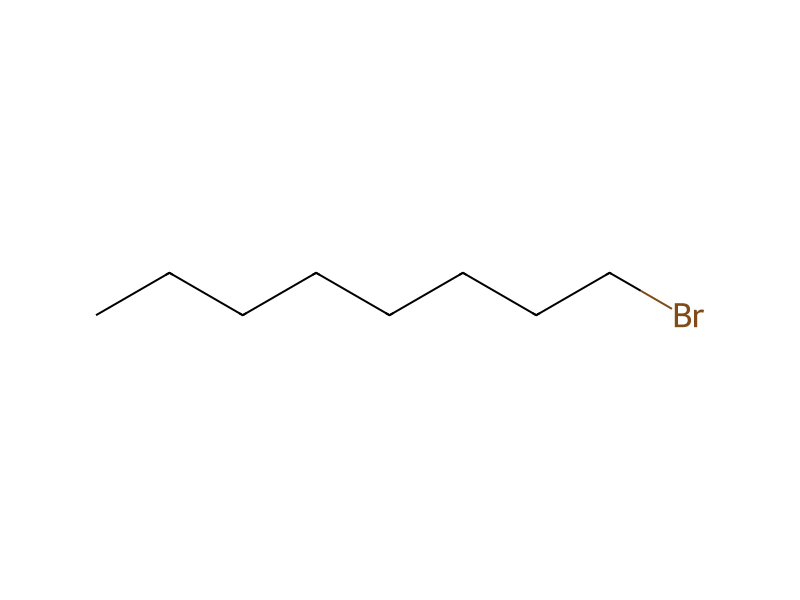
1-Bromooctane → 3-Pyridinecarboxylic acid, 6-(octyloxy)-
反応式

[OH:1][C:2]1[N:7]=[CH:6][C:5]([C:8]([OH:10])=[O:9])=[CH:4][CH:3]=1.[CH2:11](Br)[CH2:12][CH2:13][CH2:14][CH2:15][CH2:16][CH2:17][CH3:18].[OH-].[K+]>C(O)C>[CH2:11]([O:1][C:2]1[N:7]=[CH:6][C:5]([C:8]([OH:10])=[O:9])=[CH:4][CH:3]=1)[CH2:12][CH2:13][CH2:14][CH2:15][CH2:16][CH2:17][CH3:18]参加物
5




実験手順
Separately, 5 g of 6-hydroxypyridine-3-carboxylic acid and 10 g of n-octyl bromide were dissolved in 50 ml of ethanol, 50 ml of a 3N aqueous solution of potassium hydroxide was added to the solution, and the mixture was refluxed for 24 hours. Ethanol was removed from the reacted liquid by distillation, and the residue was neutralized with dilute hydrochloric acid and extracted with ethanol. The excess of n-octyl bromide was separated from the extract by the silica gel column chromatography using n-hexane as the developing solvent. Recrystallization from a mixed solvent of hexane and chloroform gave 5.4 g of 6-octyloxypyridine-3-carboxylic acid.