反応式

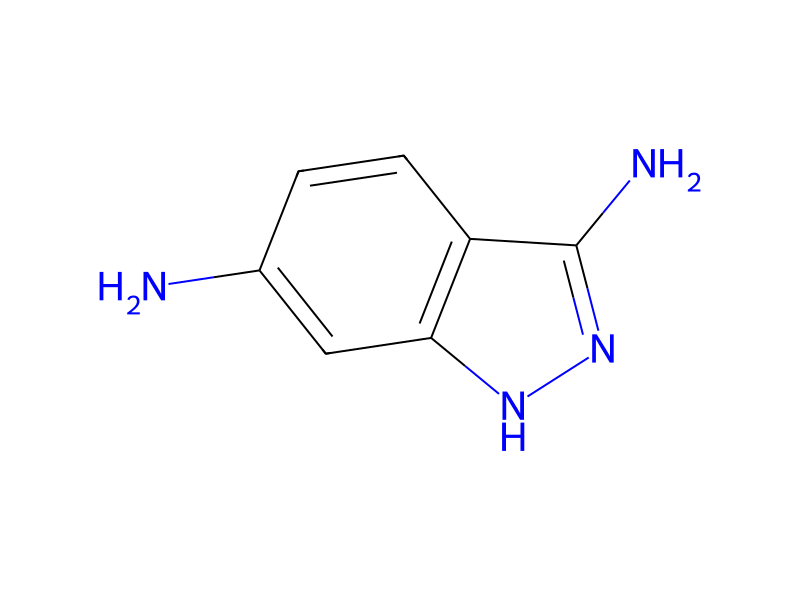
[N:1]1[CH:6]=[CH:5][CH:4]=[CH:3][C:2]=1[NH:7][C:8]1[NH:12][C:11]2[CH:13]=[CH:14][C:15]([C:17]([OH:19])=O)=[CH:16][C:10]=2[N:9]=1.[NH2:20][C:21]1[C:29]2[C:24](=[CH:25][C:26]([NH2:30])=[CH:27][CH:28]=2)[NH:23][N:22]=1.CN(C(ON1N=NC2C=CC=CC1=2)=[N+](C)C)C.F[P-](F)(F)(F)(F)F>>[NH2:20][C:21]1[C:29]2[C:24](=[CH:25][C:26]([NH:30][C:17]([C:15]3[CH:14]=[CH:13][C:11]4[NH:12][C:8]([NH:7][C:2]5[CH:3]=[CH:4][CH:5]=[CH:6][N:1]=5)=[N:9][C:10]=4[CH:16]=3)=[O:19])=[CH:27][CH:28]=2)[NH:23][N:22]=1参加物
4



実験手順
The carboxylic acid (0.5 mmol) from above was coupled with aforementioned 3,6-diaminoindazole (0.5 mmol) using HBTU as described in general procedure D to afford 2-(pyridin-2-ylamino)-1H-benzimidazole-5-carboxylic acid (3-amino-1H-indazol-6-yl)-amide. MS: m/z 385 (M+H)+.
出典と根拠
- ORDレコード
- ord-e93b1d8fe3064101a9065ede2dd61697
- 出典データセット
- uspto-grants-2013_02
- 特許番号
- US08377983B2
関連ノート
読み込み中…