反応式

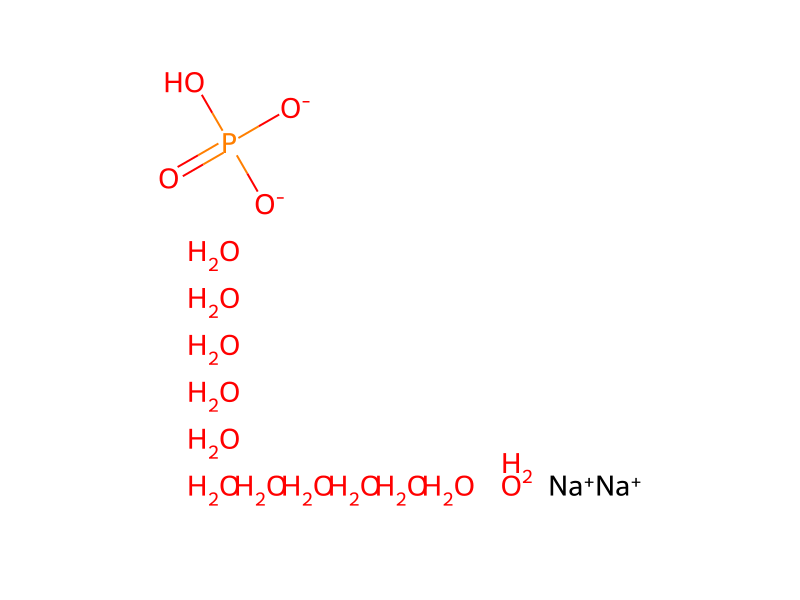
[OH2:1].O.O.O.O.O.O.O.O.O.O.O.[P:13]([O-:17])([O-:16])([OH:15])=[O:14].[Na+].[Na+].O.O.O.O.O.O.O.P([O-])([O-])(O)=[O:28].[Na+].[Na+]>>[OH2:14].[OH2:28].[OH2:1].[OH2:14].[OH2:14].[OH2:14].[OH2:14].[OH2:14].[OH2:14].[OH2:14].[OH2:14].[OH2:14].[P:13]([OH:17])([OH:16])([OH:15])=[O:14]参加物


実験手順
Disodium hydrogenphosphate dodecahydrate is, however, incongruently melted to generate disodium hydrogenphosphate heptahydrate, which is precipitated at the bottom of the solution. When this solution is cooled, crystal of disodium hydrogenphosphate heptahydrate is grown owing to secondary nucleation (which means herein generation of new nuclear crystal in a supersaturated solution including seed crystal). This makes it impossible to obtain objective disodiun hydrogenphosphate dodecahydrate. In order to avoid the secondary nucleation, it is necessary to heat the solution until disodium hydrogenphosphate heptahydrate is dissolved. However, the solution is required to be cooled down to a temperature of approximately 22° C. to generate disodium hydrogenphosphate dodechydrate crystal in the solution. In this manner, there arises a problem of large supercooling (approximately 13° C.). In order to achieve comfortableness in the heating system for a building or the like, the heat storage material having such large supercooling is lack of practicability. Thus, it is required to suppress the supercooling to be approximately 5° C. or less.
後処理
- customis precipitated at the bottom of the solution
- temperatureWhen this solution is cooled
出典と根拠
- ORDレコード
- ord-1741ae044f8a40de84d23e3735e410c7
- 出典データセット
- uspto-grants-1998_10
- 特許番号
- US05827915
関連ノート
読み込み中…