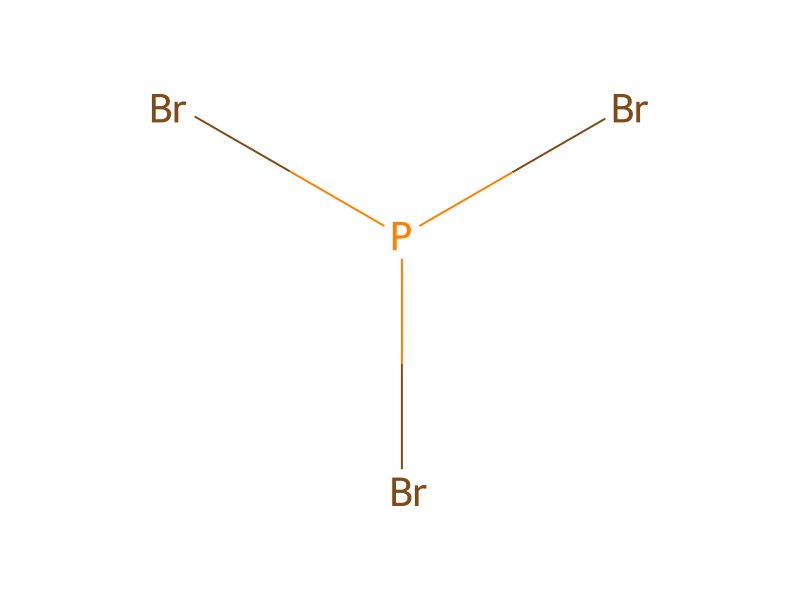
Phosphorus tribromide → 1-(Benzyloxy)-4-bromo-2-(bromomethyl)benzene
HRID 427750
反応式

[CH2:1]([O:8][C:9]1[CH:16]=[CH:15][C:14]([Br:17])=[CH:13][C:10]=1[CH2:11]O)[C:2]1[CH:7]=[CH:6][CH:5]=[CH:4][CH:3]=1.P(Br)(Br)[Br:19]>C(OCC)C>[CH2:1]([O:8][C:9]1[CH:16]=[CH:15][C:14]([Br:17])=[CH:13][C:10]=1[CH2:11][Br:19])[C:2]1[CH:7]=[CH:6][CH:5]=[CH:4][CH:3]=1参加物
4



実験手順
A solution of 2-benzyloxy-5-bromobenzyl alcohol (14.75 g, 50.2 mmol) in anhydrous ethyl ether (150 ml) was cooled to 4° C. A solution of PBr3 (13.68 g, 50 mmol) in anhydrous ether (40 ml) was added dropwise keeping the temperature below 10° C. The reaction was allowed to warm to ambient temperature and stirred for 1 hour. The reaction was filtered through silica gel (200 g). The silica gel was washed with ethyl ether to remove all the product. The filtrate was washed with water (1×150 ml), aqueous saturated sodium hydrogen carbonate (1×150 ml) and brine (1×150 ml). The organic layer was dried (Na2SO4) and evaporated to give 2-benzyloxy-5-bromobenzylbromide as a pale yellow oil (15.2 g, 85%) which crystallised on standing.