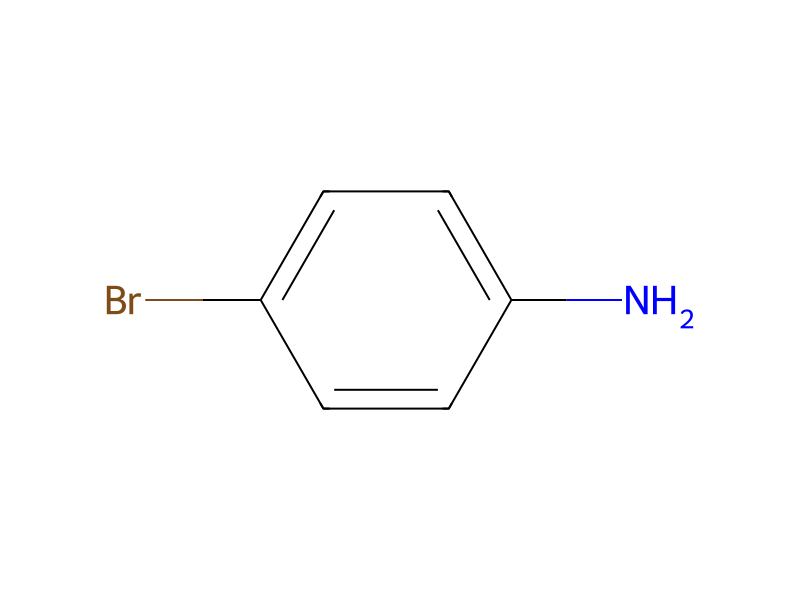
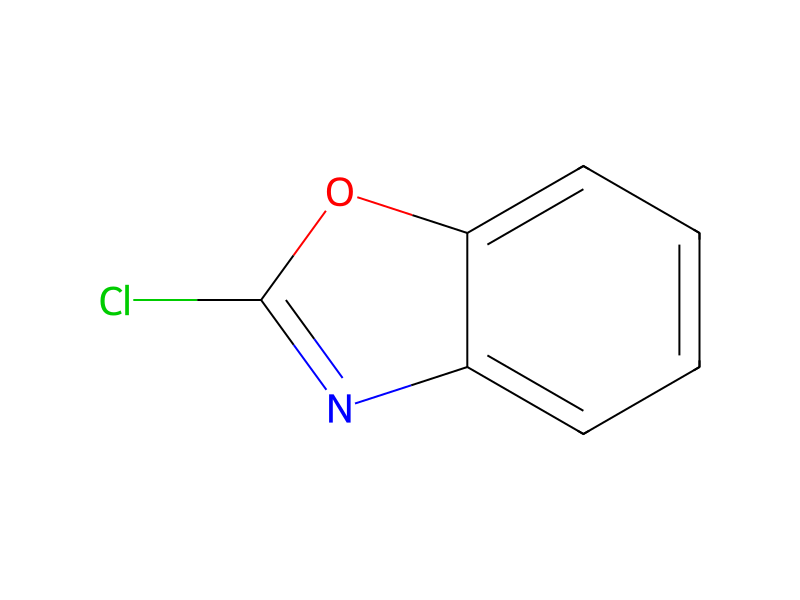
4-Bromoaniline → N-(4-Bromophenyl)benzo[d]oxazol-2-amine
HRID 432345
反応式

[Br:1][C:2]1[CH:8]=[CH:7][C:5]([NH2:6])=[CH:4][CH:3]=1.Cl[C:10]1[O:11][C:12]2[CH:18]=[CH:17][CH:16]=[CH:15][C:13]=2[N:14]=1>>[O:11]1[C:12]2[CH:18]=[CH:17][CH:16]=[CH:15][C:13]=2[N:14]=[C:10]1[NH:6][C:5]1[CH:7]=[CH:8][C:2]([Br:1])=[CH:3][CH:4]=1参加物
3

反応条件
- 温度
- 100 °C
実験手順
4-Bromoaniline (3.9 g, 0.0227 mol) was added to a solution of 2-chlorobenzoxazole (1.16 g, 0.00755 mol) in xylenes and the reaction mixture was heated at 100° C. for 2 hours. It was cooled to ambient temperature and concentrated under reduced pressure. The residue was partitioned between ethyl acetate (50 mL) and water (50 mL), the organic phase was dried with magnesium sulfate and concentrated under reduced pressure. The residue was triturated in n-heptane and the precipitate collected by filtration and dried to yield N-(1,3-benzoxazol-2-yl)-N-(4-bromophenyl)amine (1.48 g, 0.00512 mol) as a white solid.