反応式

[C:1]([C@H:4]([C@@H:6]([C:8]([O-:10])=[O:9])[OH:7])[OH:5])([O-:3])=[O:2].C([C@H]([C@@H](C([O-])=O)O)O)([O-])=O.[Na+].[Na+].C([C@H]([C@@H](C([O-])=O)O)O)([O-])=O.[Ca+2].S(=O)(=O)(O)O>[O-][W]([O-])(=O)=O>[C:8]([OH:10])(=[O:9])[C@H:6]([C@@H:4]([C:1]([OH:3])=[O:2])[OH:5])[OH:7]参加物
6



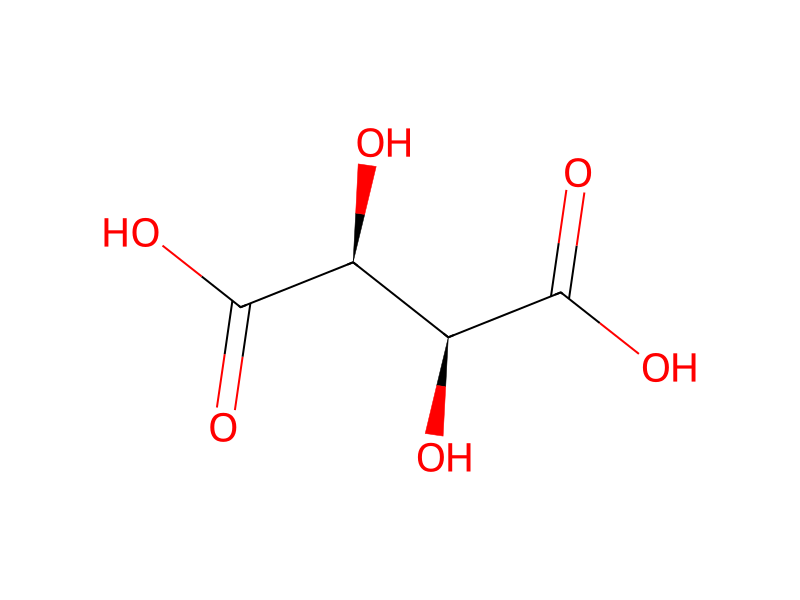

実験手順
Three samples of disodium cis-epoxysuccinate solution containing different amount of tungstate were separately converted to d-tartrate by treatment with a microbiorganism (FERM-P 2507) which has the ability to convert cis-epoxysuccinate to d-tartrate selectively. Disodium d-tartrate enzymatically prepared was converted to calcium d-tartrate, followed by acid-treatment with sulfuric acid to afford d-tartaric acid. The tungstate contents in the product and the starting material are compared in Table 3.
出典と根拠
- ORDレコード
- ord-beb21073748a4959ae5ff0eba22457b7
- 出典データセット
- uspto-grants-1977_12
- 特許番号
- US04065475
関連ノート
読み込み中…