Hydrazine → 2-Hydrazino-6,7-difluoroquinoxaline
HRID 465329
反応式

Cl[C:2]1[CH:11]=[N:10][C:9]2[C:4](=[CH:5][C:6]([F:13])=[C:7]([F:12])[CH:8]=2)[N:3]=1.[NH2:14][NH2:15]>CCO>[NH:14]([C:2]1[CH:11]=[N:10][C:9]2[C:4](=[CH:5][C:6]([F:13])=[C:7]([F:12])[CH:8]=2)[N:3]=1)[NH2:15]参加物
4
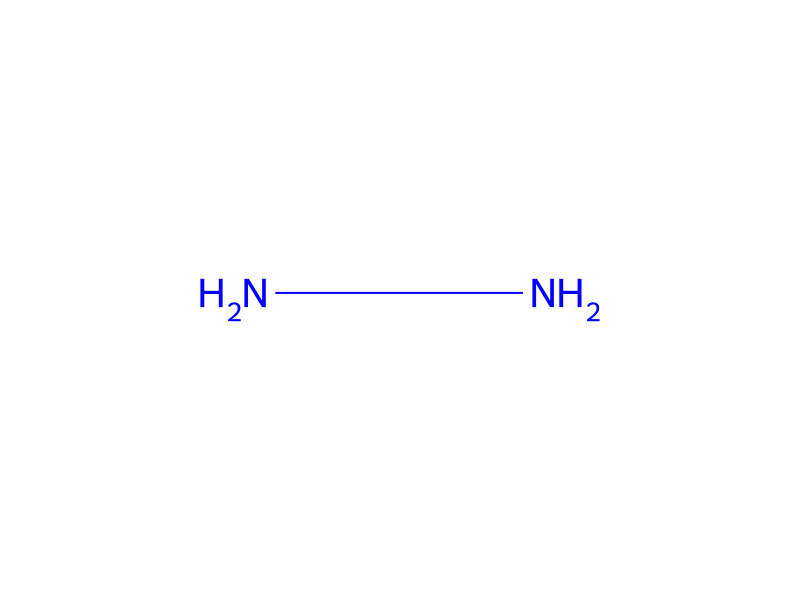



実験手順
The foregoing methodology was followed starting with 2-chloro-6,7-difluoroquinoxaline. This compound (4.00 g, 19.9 mmol) was dissolved in 100 ml of absolute EtOH. Hydrazine (1.4 ml, 44 mmol) was added, and the mixture heated at reflux for 21/2 hours. The mixture was cooled and allowed to stand overnight before collecting the resulting precipitate, yielding 3.80 g of an orange, solid 2-hydrazino-6,7-difluoroquinoxaline. This product (3.8 g, 19.4 mmol) was stirred in 30 ml triethylorthoformate and heated at reflux (100° C.) for 5 hours. The resulting product was cooled to room temperature, filtered and dried, yielding 2.63 g of 7,8-difluoro-1,2,4-triazolo[4,3-a]quinoxaline (13).