反応式

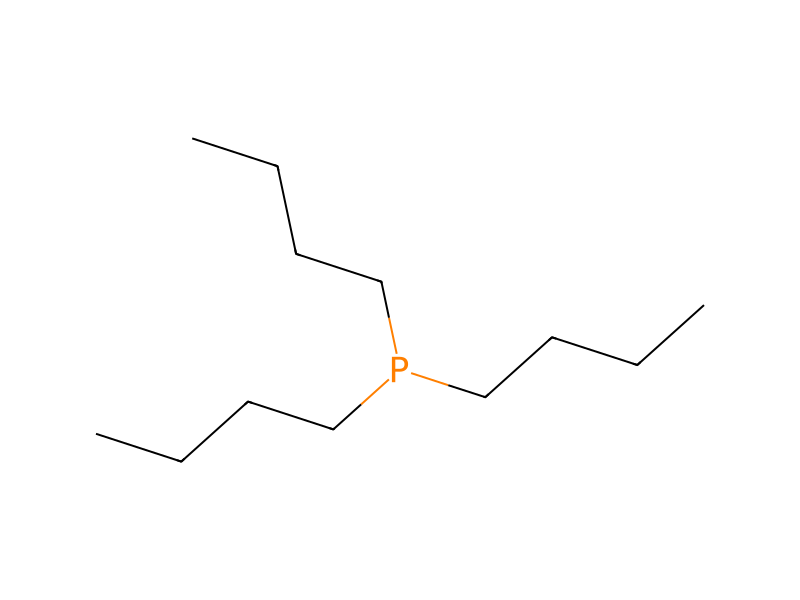
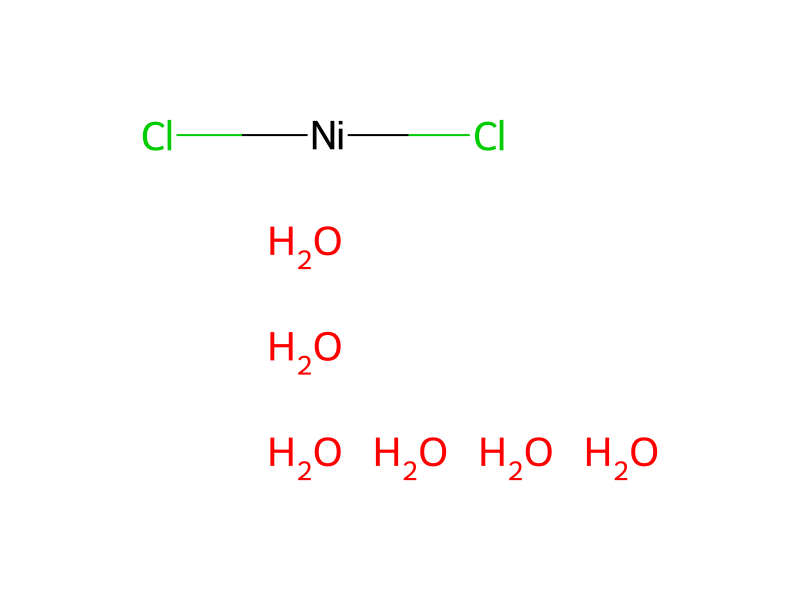
O.O.O.O.O.O.[Ni:7]([Cl:9])[Cl:8].[CH2:10]([P:14]([CH2:19][CH2:20][CH2:21][CH3:22])[CH2:15][CH2:16][CH2:17][CH3:18])[CH2:11][CH2:12][CH3:13]>>[Cl:8][Ni:7][Cl:9].[CH2:19]([P:14]([CH2:10][CH2:11][CH2:12][CH3:13])[CH2:15][CH2:16][CH2:17][CH3:18])[CH2:20][CH2:21][CH3:22].[CH2:19]([P:14]([CH2:10][CH2:11][CH2:12][CH3:13])[CH2:15][CH2:16][CH2:17][CH3:18])[CH2:20][CH2:21][CH3:22]参加物

実験手順
In a continuous plant, nickel (II) chloride hexahydrate at a rate of 261.6 kg/hr is mixed with tri-n-butylphosphine at a rate of 404.6 kg/hr in a reactor operated at about 27° C. to yield 534.3 kg/hr of the complex bis(tri-n-butylphosphine) dichloronickel. To dilute the complex and reduce water solubility in the organic phase, 1243.6 kg/hr of n-pentane is recycled from the drying column to the reactor. Average residence time in the reactor is ten minutes. Complex dissolved in n-pentane is phase separated from the aqueous phase and pumped to a drying column where the residual water, 0.3 kg/hr, is azeotroped overhead with the pentane, condensed, and phase separated to permit decantation of the water. Part of the pentane is returned to the column as reflux and the remainder is recycled to the reactor. A heavier solvent, n-heptane, is added to the column to dilute the complex which is yielded as bottoms product.
後処理
- customoperated at about 27° C.
出典と根拠
- ORDレコード
- ord-c72fe8abcc954aeaa3cda53a48a32af8
- 出典データセット
- uspto-grants-1979_11
- 特許番号
- US04176086
関連ノート
読み込み中…