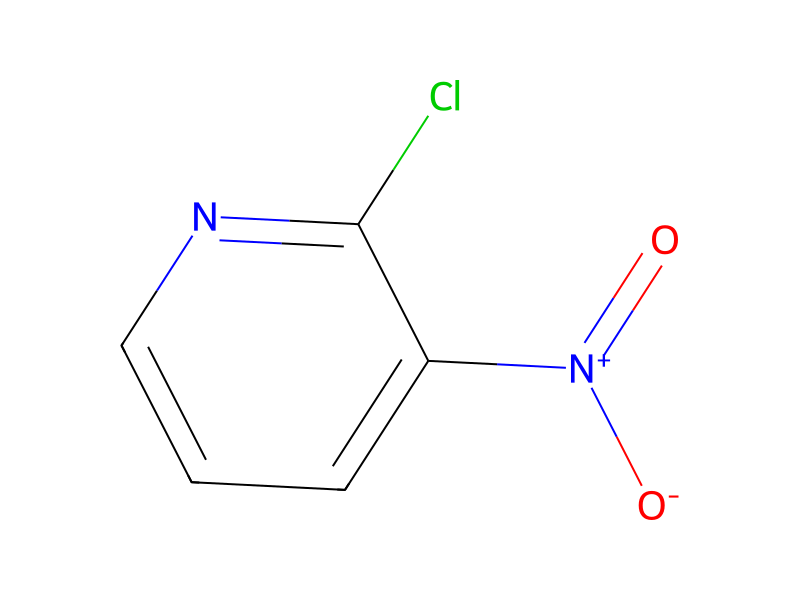
2-Chloro-3-nitropyridine (20 g, 126.18 mmol), methane boronic acid (9.8 g, 164 mmol), tetrakis(triphenylphosphine)palladium (11.66 g, 10 mmol) and potassium carbonate (51.48 g, 378.6 mmol) were all mixed in 1-4 dioxane (500 mL), degasified and heated to 100° C. for 48 h under N2. Work up was carried out by allowing the reaction mass to cool to ambient temperature and quenched with water and extracted with ethyl acetate. The aqueous layer was back extracted with ethyl acetate. The combined organic layers were dried over anhydrous Na2SO4 and concentrated under reduced pressure to give a solid. The solid was further purified by silica gel column chromatography using 6% of ethyl acetate in hexane as eluent to give 2-methyl-3-nitropyridine as an off white solid: 1H-NMR (CDCl3) δ: 2.9 (s, 3H), 7.4 (m, 1H), 8.3 (d, 1H), 8.7 (d, 1H).