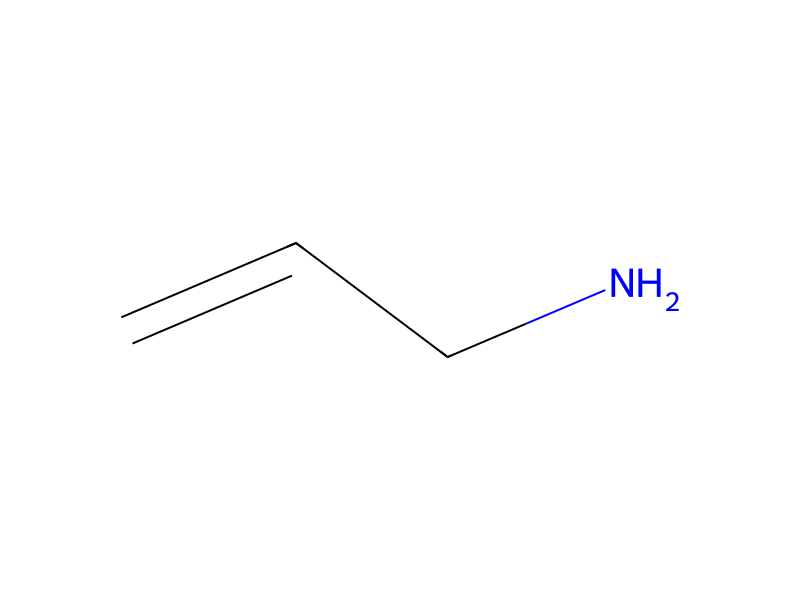
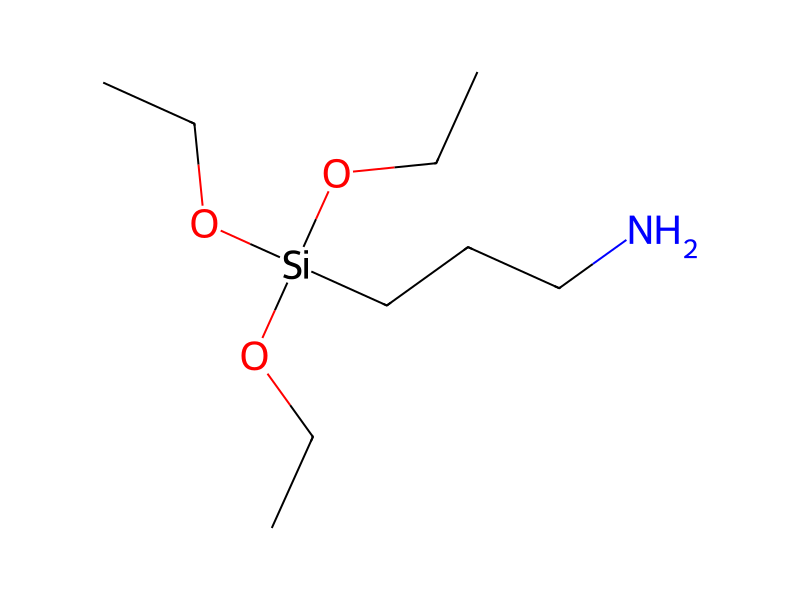
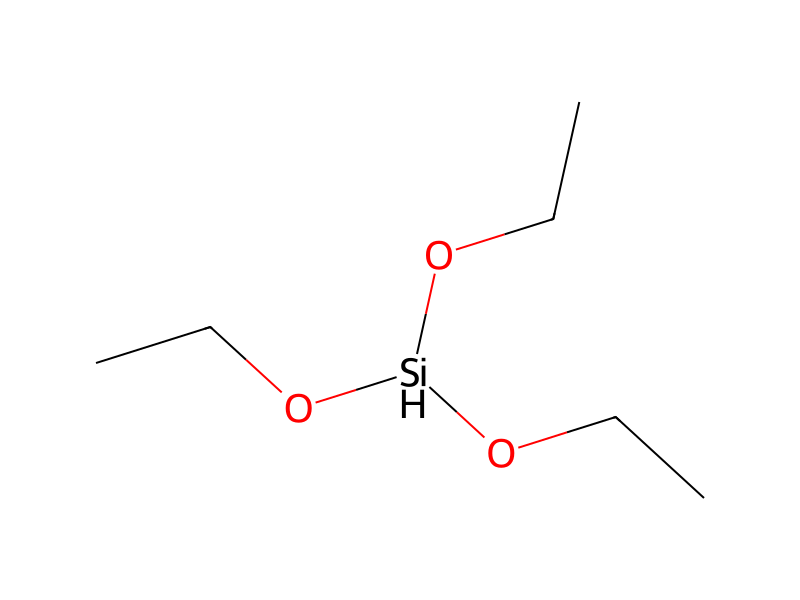
[CH2:1]([NH2:4])[CH:2]=[CH2:3].C(O[SiH](OCC)OCC)C.N[CH2:16][CH2:17][CH2:18][Si:19]([O:26][CH2:27][CH3:28])([O:23][CH2:24][CH3:25])[O:20][CH2:21][CH3:22]>[C-]#[O+].[C-]#[O+].[C-]#[O+].[C-]#[O+].[C-]#[O+].[C-]#[O+].[C-]#[O+].[C-]#[O+].[C-]#[O+].[C-]#[O+].[C-]#[O+].[C-]#[O+].[Rh].[Rh].[Rh].[Rh].C1(C)C=CC=CC=1>[CH2:1]([NH2:4])[CH:2]=[CH2:3].[NH2:4][CH:17]([CH3:16])[CH2:18][Si:19]([O:26][CH2:27][CH3:28])([O:23][CH2:24][CH3:25])[O:20][CH2:21][CH3:22]A three-neck flask equipped with a reflux condenser, stirring rod and thermometer was charged with 14 grams of allylamine (0.25 mole), 41 grams of triethoxy silane (0.25 mole) and 30 ml. of toluene, and heated in an oil bath maintained at a temperature of 110° C. When the temperature of the mixture reached 85° C., 0.22 gram of tetrarhodium dodecacarbonyl was added to the mixture as a catalyst. About 30 minutes after the addition of the catalyst, the reaction temperature reached 110° C. At the end of the period the reaction mixture was subjected to gas chromatography analysis. It was found that gamma-aminopropyl triethoxy silane was obtained in a yield of 68% on an allylamine basis, while the yield of beta-aminopropyl triethoxy silane was 4.9% on an allylamine basis.