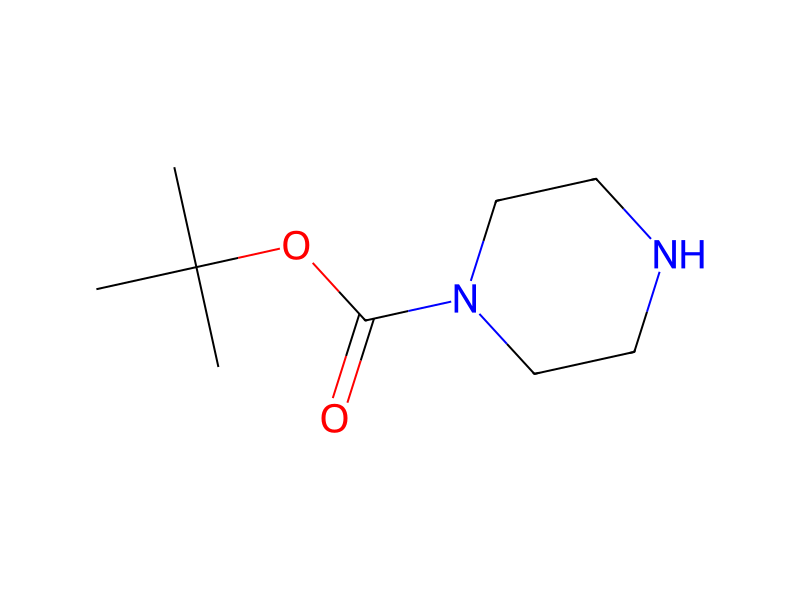
[N:1]1[CH:6]=[CH:5][C:4](C(O)=O)=[CH:3][CH:2]=1.C([N:12]([CH2:15]C)CC)C.C1(P(N=[N+]=[N-])(C2C=CC=CC=2)=[O:24])C=CC=CC=1.[C:34]([O:38][C:39]([N:41]1[CH2:46][CH2:45][NH:44][CH2:43][CH2:42]1)=[O:40])([CH3:37])([CH3:36])[CH3:35]>C1(C)C=CC=CC=1.C(OCC)(=O)C>[C:34]([O:38][C:39]([N:41]1[CH2:46][CH2:45][N:44]([C:15](=[O:24])[NH:12][C:4]2[CH:3]=[CH:2][N:1]=[CH:6][CH:5]=2)[CH2:43][CH2:42]1)=[O:40])([CH3:37])([CH3:35])[CH3:36]To a solution of pyridine-4-carboxylic acid (1.0 g) and triethylamine (1.2 ml) in toluene (20 ml) was added diphenylphosphoryl azide (1.75 ml) at ambient temperature. The resulting mixture was heated to reflux for 30 minutes and cooled to 0° C. To the mixture was added 1-tert-butoxycarbonylpiperazine (1.51 g), and the mixture was allowed to heat to 90° C. for 1 hour. After cooling to ambient temperature, the reaction mixture was taken up into ethyl acetate, washed in turn with water and brine, dried over magnesium sulfate, and evaporated under reduced pressure. The residue was chromatographed on silica gel (150 ml) eluting with 0-7% methanol in dichloromethane. Trituration with a mixture of diisopropyl ether and ethanol gave 1-tert-butoxycarbonyl-4-(pyridin-4-ylcarbamoyl)piperazine (0.66 g).