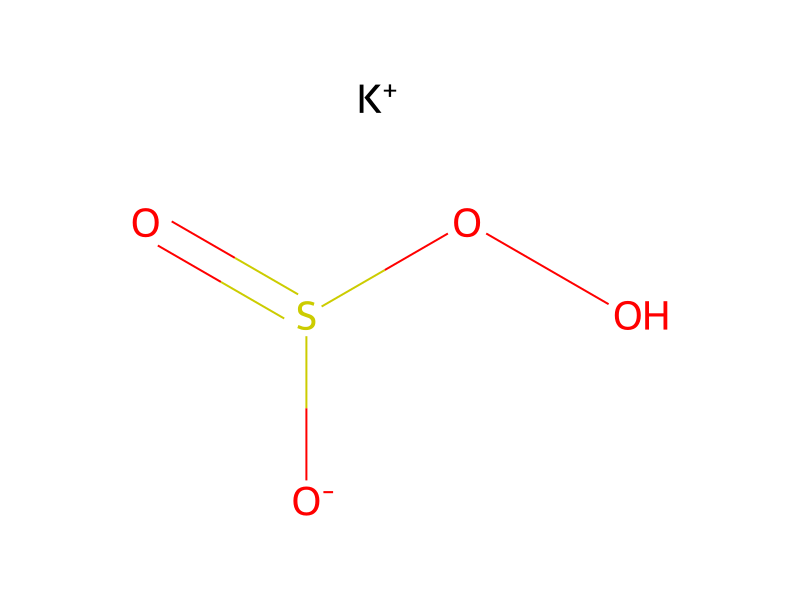
To a stirred solution of 4-(4-chlorophenyl)benzaldehyde (0.84 g, 3.9 mmol) in 30 mL acetonitrile-acetone (2: 1) is added 15 mL water and solid sodium bicarbonate (3.5 g, 41.7 mmol). After 5 min. a 25 mL solution of oxidation reagent (Oxone: 4.8 g, 7.8 mmol in 25 mL water containing 4×10⁻⁴ M EDTA) is added dropwise over 15 min. then stirred for an additional 3.5 h. The reaction mixture is then treated with 18 mL aq. sodium bisulfite (9.5 g), stirred 2 h, then acidified with 10 mL 6 M HCl. The mixture is transferred to a separatory funnel and diluted with 300 mL dichloromethane and 400 mL water. The water layer is washed with dichloromethane (3×120 mL), organic layers combined, then washed with 500 mL water. The organic layer is dried over sodium sulfate, filtered, and evaporated under reduced pressure. The desired acid is crystallized from acetone-water (5:2), filtered, washed with water, and evaporated under reduced pressure from toluene affording 0.6 g product. Remaining product could be isolated by chromatography but the amount obtained is satisfactory. TLC: Rf=0.3 (chloroform-methanol; 10:1).