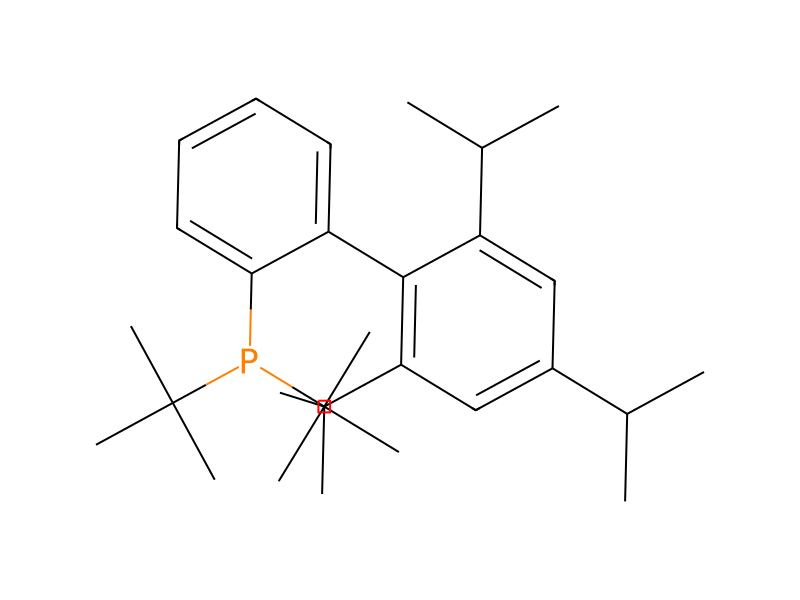
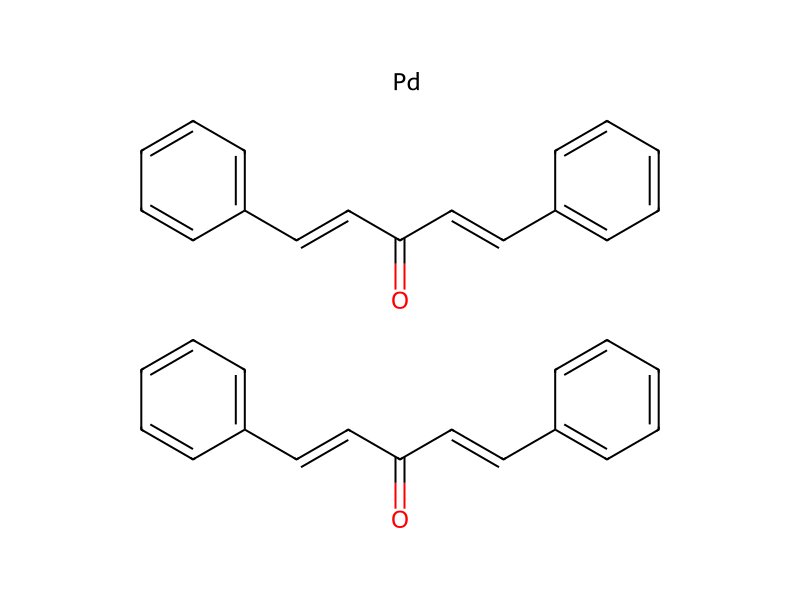
[CH3:1][S:2]([NH2:5])(=[O:4])=[O:3].C(P(C(C)(C)C)C1C=CC=CC=1C1C(C(C)C)=CC(C(C)C)=CC=1C(C)C)(C)(C)C.[CH2:36]([C:40]1[O:41][C:42]2[CH:48]=[CH:47][C:46](Br)=[CH:45][C:43]=2[CH:44]=1)[CH2:37][CH2:38][CH3:39].C(OCC)(=O)C.CC1CCCCC1>C(OCC)(=O)C.C1C=CC(/C=C/C(/C=C/C2C=CC=CC=2)=O)=CC=1.C1C=CC(/C=C/C(/C=C/C2C=CC=CC=2)=O)=CC=1.[Pd]>[CH2:36]([C:40]1[O:41][C:42]2[CH:48]=[CH:47][C:46]([NH:5][S:2]([CH3:1])(=[O:4])=[O:3])=[CH:45][C:43]=2[CH:44]=1)[CH2:37][CH2:38][CH3:39]The following are placed in a 20 ml tube predried in an oven: 2 equivalents of base and 1.5 equivalents of methanesulfonamide, 2 mol % of Pd(dba)2 and 5 mol % of 2-(di-tert-butylphosphino)-2′,4′,6′-triisopropyl-1,1′-biphenyl (ligand L1). The tube is stoppered with a septum and placed under an inert atmosphere of argon, and 1 equivalent of 2-n-butyl-5-bromobenzofuran (compound IX or II) dissolved in 10 volumes of solvent is then added by syringe. The reaction medium is then stirred and heated to the reflux point of the solvent or at 100° C. for 24 hours, while monitoring the reaction progress by TLC (eluent: 20/80 ethyl acetate/methylcyclohexane) or by HPLC. At the end of the reaction, the reaction medium is diluted with ethyl acetate and then filtered while hot. The filtrate is then concentrated to give, when cold, crystallization of the desired compound I.