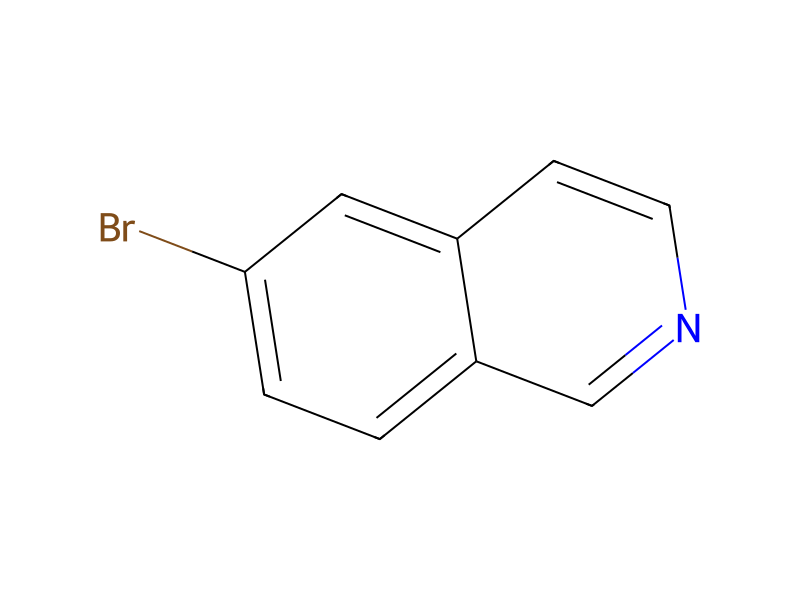
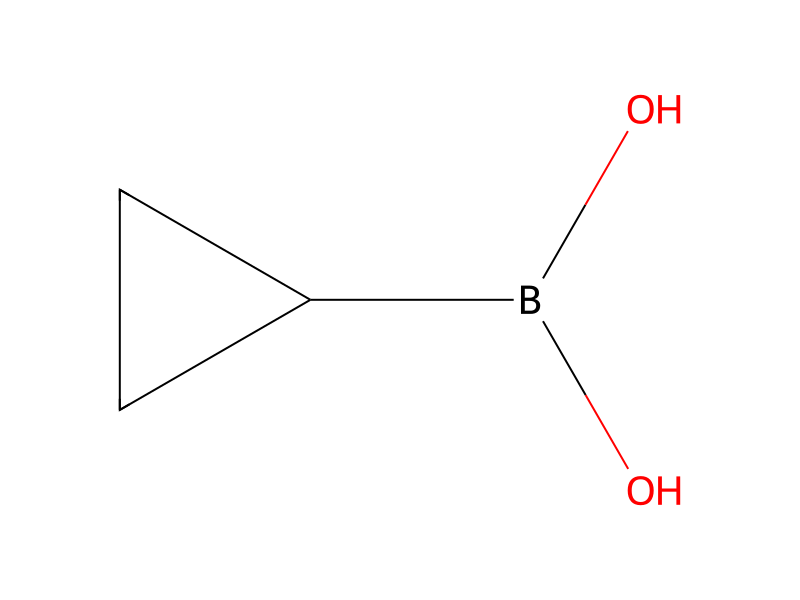
To a degassed solution of 6-bromoisoquinoline (0.9 g, 0.004 mol) in 1,4-dioxane (15 mL) was added cyclopropylboronic acid (0.560 g, 0.007 mol) followed by the addition of degassed aqueous solution of K2CO3 (3.1 g, 0.02 mol) and PdCl2(dppf) (0.190 g, 0.002 mol). The resulting reaction mixture was stirred at 110° C. for 10 h. After completion, the reaction mixture was filtered over Celite® (diatomaceous earth) and the filtrate was concentrated at reduced pressure to obtain crude 6-cyclopropylisoquinoline. Purification was done by silica gel column chromatography eluting with EtOAc in hexanes (10-30%) to afford pure 6-cyclopropyl-isoquinoline (0.500 g, 68%) as yellow liquid.